
The Art of Eating Well in a Packaged World
What to Look for When You Turn the Package Over
There’s a moment that happens in the grocery store that most people don’t think about, much less talk about. You’re standing in the aisle, holding two versions of the same product. Both look healthy. One says “natural.” The other says “heart smart.” One promises whole grains. The other highlights protein. You flip them over, glance at the back, feel a flicker of uncertainty… and then choose one and move on.
It doesn’t feel dramatic - it’s just shopping after all.
But those small, quiet decisions — repeated week after week — shape the pattern of how you eat.
Reading food labels isn’t about obsessing over numbers or eliminating every packaged item from your pantry. It’s about becoming fluent. It’s about knowing enough to move through the grocery store with clarity instead of confusion — especially in a food environment that has become increasingly engineered, marketed, and optimized for shelf life rather than nourishment.

The art of eating well today isn’t about eliminating everything packaged. It’s about learning how to navigate it wisely. It’s about understanding what truly supports you now — and what simply sounds good in bold print.
The Modern Food Landscape: Why It Feels So Complicated
If grocery shopping feels more confusing than it used to, you’re not imagining it.
Over the past several decades, food manufacturing has evolved dramatically. Products are formulated by food scientists as they engineer flavors, refine textures, and extend shelf life. Marketing has become more strategic. Nutrition trends cycle rapidly — low-fat, low-carb, gluten-free, keto, high-protein, plant-based.
At the same time, social media amplifies simplified messages where one week seed oils are the villain and the next week carbohydrates are the problem. Entire categories of food are dismissed in 60-second influencer clips.
It creates noise that is overwhelming and hard to ignore.
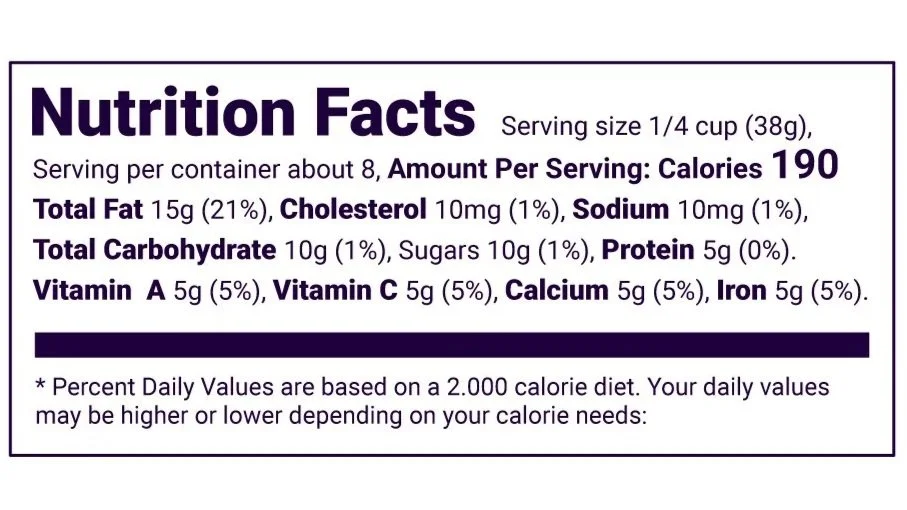
But the food nutrition label itself hasn’t changed nearly as much as the messaging around it. The information has always been there — in plain sight — printed in small type on the back.
When you shift your focus from the front of the package to the back, you step out of the noise and into the data.
When “Processed” Isn’t the Whole Story
There’s been a lot of conversation in recent years about ultra-processed foods — a phrase sounds ominous, and sometimes it’s used that way online. But like most nutrition topics, the truth is more nuanced than the headlines. The term comes from researchers at the University of São Paulo who developed a classification system called NOVA to describe levels of food processing and it helps to understand what it really means.
Processing, in itself, is not the enemy. Washing, freezing, fermenting, canning, grinding — all of these are forms of processing. Frozen vegetables are processed. Canned beans are processed. Plain yogurt is processed. These foods have been altered in some way for preservation or safety, yet they still resemble food.
Ultra-processed foods are different. They are typically industrial formulations built primarily from refined starches, extracted oils, isolated proteins, added sugars, and cosmetic additives like emulsifiers and flavor enhancers. They tend to have long ingredient lists with items you wouldn’t use in your own kitchen. They’re designed to be hyper-palatable, highly convenient, and shelf stable. Convenient. Consistent. Easy to overeat.
You can often recognize ultra-processed foods quickly. Consider two granolas. The first contains rolled oats, almonds, pumpkin seeds, maple syrup, olive oil, and sea salt. The second contains oat flour, soy protein isolate, brown rice syrup, palm oil, maltodextrin, glycerin, and natural flavors.
Both are technically “granola.” One is built from recognizable foods. The other is a formulation. Reading the ingredient list reveals that difference instantly.
But the goal isn’t to label foods as good or bad. It’s to recognize the difference between a food that’s been prepared and one that’s been engineered. And that awareness allows you to decide - without drama - what aligns with your goals and what doesn’t.
The Front of the Package Is a Story. The Back Is Data.
“Natural.”
“Light.”
“Multigrain.”
“Made with real fruit.”
These phrases are persuasive. They’re designed to create a feeling — not to provide clarity.
“Multigrain” simply means more than one grain was used. It doesn’t mean whole grain. “Low-fat” often means sugar was increased to maintain flavor. “Gluten-free” is essential for some, irrelevant for others, and not automatically synonymous with nutritious.
None of this is malicious. It’s marketing.
Once you accept that the front of the package is selling and the back is informing, your role shifts. You become less reactive and more discerning.
The Ingredient List Is Where the Truth Lives
When I pick up a packaged food, I don’t start with calories. I don’t start with fat grams. I flip it over and read the ingredients.
Not because I’m looking for perfection. I’m looking for proportion. Ingredients are listed in descending order by weight. The first few items tell you what the product mostly is. That alone is powerful information.
If the first ingredients resemble something you might cook with - whole grain flour, oats, chickpeas, almonds, tomatoes, or yogurt, that’s useful information. If the first ingredients are enriched wheat flour, sugar, soybean oil, and modified starch, you’re looking at something more refined and engineered and that’s useful too.
It doesn’t mean you can’t eat it. It just means you understand what it is and realize they are not equivalent.
Sugar is particularly revealing as it rarely appears alone. It may show up as cane sugar, brown rice syrup, fruit juice concentrate, maltose, dextrose, or high fructose corn syrup. Sometimes multiple sweeteners appear in the same product, each in smaller amounts so none rise to the top of the list, even though collectively they make up a significant portion of the product. You begin to see how formulation works.
And that knowledge makes you more discerning, not more restrictive.
Real-Life Label Comparison: Yogurt
Let’s make this concrete.
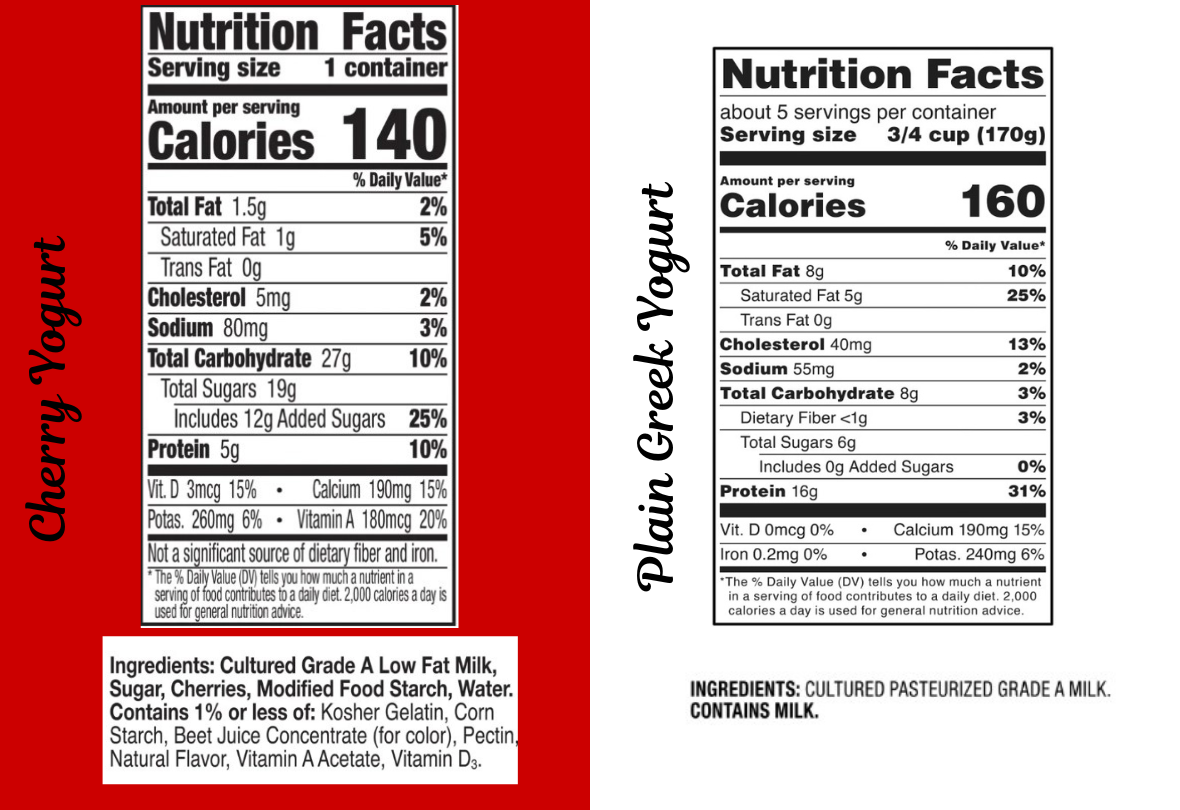
You’re in the yogurt aisle. One single-serve fruit yogurt lists 19 grams of sugar, 12 of which are added. Protein is modest. The ingredient list includes milk, sugar, fruit, modified food starch, water, gelatin, corn starch, beet juice concentrate (for color), and pectin.
A plain Greek yogurt beside it contains 6 grams of naturally occurring lactose and 16 grams of protein. Its ingredient list reads: cultured milk.
Both are yogurt.
But the experience in your body will be different. The sweetened yogurt will digest quickly, potentially spike blood sugar, and leave you hungry sooner. The plain yogurt, paired with fresh berries and nuts, will provide protein, fiber, and slower digestion.
The choice isn’t about “good” versus “bad.” It’s about understanding what you’re actually eating.
Added Sugars: Why the Distinction Matters
In 2020, the Nutrition Facts label was updated by the U.S. Food and Drug Administration to include a separate line for added sugars. This was a meaningful change, not cosmetic one.
The total sugars listing includes both naturally occurring sugars and added sugars but separates them out because they behave differently in the body and serve different purposes in the food. Naturally occurring sugars — like those in fruit or plain dairy — exist within a matrix of fiber, protein, and micronutrients. Added sugars are different. They’re incorporated for sweetness, texture, preservation, or marketing appeal.
Their effects on the body differ too. Natural sugars, with their fiber and nutrients, provide sustained energy and a slow, stable rise in blood sugar. In contrast, added sugars cause rapid blood sugar spikes and when consumed in excess can lead to weight gain, metabolic disorders, and even dental issues.
For many adults — particularly women in midlife — paying attention to added sugars can make a noticeable difference in energy stability. Hormonal shifts can alter insulin sensitivity. Blood sugar swings may feel sharper. Afternoon crashes become more pronounced.
You don’t need to eliminate added sugars entirely. But noticing how often they appear — and in what amounts — can shift your daily experience of hunger, energy, and cravings.
Flavored yogurt that contains more sugar than a cookie. Tomato sauce with as much added sugar as dessert. Granola marketed as wholesome but delivering double-digit sugar per serving. The difference is simply formulation.
Paying attention to added sugars isn’t about restriction. It’s about steadier energy and fewer surprises. Without turning the package over, you would never know.
Fiber and Protein: The Quiet Stabilizers
If added sugar draws your attention, fiber and protein deserve it too as these two nutrients quietly change everything.
Fiber slows digestion, supports satiety, and feeds beneficial gut microbes. Yet many ultra-processed foods are stripped of fiber, even when they are marketed as whole grain. A cereal may appear hearty on the front, yet contain only 1 gram of fiber per serving.
Protein supports muscle mass, metabolic health, and fullness — particularly important as we age. After 40, muscle mass declines more easily and the body requires more intentional support. Adequate protein aids metabolic health, bone integrity, and satiety.
When you read a label, look at how these two nutrients show up. A frozen meal with 7 grams of protein will behave differently than one with 20 grams. A breakfast cereal with minimal fiber and almost no protein will behave differently in your body than one anchored by both. A snack bar with 2 grams of fiber will affect hunger differently than one with 6.
This isn’t about chasing numbers. It’s about anticipating how a food will make you feel an hour later— not just what the packaging promises.
Additives Without Alarm
It’s easy to get anxious about additives. Social media amplifies alarmist narratives, using words like “chemical,” “toxic,” and “poison” without context. A long ingredient list goes viral, and unfamiliar words are treated as proof of danger.
But the reality is more nuanced.
Everything is a chemical — water, salt, vitamin C. The word itself doesn’t indicate harm; dose, frequency, and overall diet matter. Additives serve specific purposes: preventing spoilage, keeping textures stable, and maintaining consistent flavor in large-scale food production.
In the U.S., many are regulated by the FDA. Some are “Generally Recognized as Safe” (GRAS), meaning they aren’t known to cause harm at typical levels — not that they add nutritional value.
The bigger picture is cumulative exposure. Ultra-processed foods may contain emulsifiers, stabilizers, flavor enhancers, colorings, and preservatives. Individually they’re considered safe, but collectively they signal a highly engineered food. The question isn’t “Is this one ingredient dangerous?” but “How much of my diet relies on heavily processed foods?”
If most of your meals are whole foods — vegetables, legumes, grains, nuts, seeds, fish, poultry, yogurt — occasional additives are minor. But frequent reliance on complex, processed products reflects a diet built on formulation rather than food.
Some additives are practical: preservatives in canned beans prevent spoilage, emulsifiers in nut butter prevent separation, citric acid preserves freshness. Not all deserve the same scrutiny.
Rather than panic at unfamiliar words, ask:
Would I make this at home?
Is it occasional or daily?
Does the ingredient list feel proportional to the food?
Health is shaped by patterns over time, not a single emulsifier. With a diet anchored in minimally processed foods, additives fade into the background. Perspective matters more than panic.
Midlife Changes the Conversation
In your 20s and 30s, you may not have felt immediate consequences from dietary patterns. Metabolism was more forgiving. Muscle mass was easier to maintain. Blood sugar swings were less obvious.
Midlife changes that.
In your 40s hormonal shifts often begin subtly and influence how carbohydrates are processed. Blood sugar may feel less forgiving and energy may fluctuate more dramatically. This is a decade where protein and fiber begin to matter more than they once did.
In your 50s, muscle mass naturally declines unless intentionally supported by distributing protein across meals. Bone density deserves attention and places an emphasis on calcium and vitamin D. Sodium sensitivity may increase for some individuals if blood pressure trends upwards triggering brand comparisons for sodium content.
In your 60s and beyond, appetite may decrease even as nutrient needs remain high. This is where nutrient density becomes key because smaller portions now need to deliver meaningful protein, fiber, and micronutrients.
Reading labels through this lens becomes strategic. You might prioritize protein more intentionally. You may notice how certain foods affect your energy. You may compare sodium levels between brands where you once didn’t.
It’s not about eating less, counting calories, or chasing macros - it’s about eating with more awareness.
Convenience Isn’t the Problem
There’s a quiet pressure in the wellness world to cook everything from scratch. To soak the beans. To chop the vegetables. To make the sauce.
And while that can be beautiful, it isn’t always realistic.
Health doesn’t unravel because you used frozen vegetables. It doesn’t disappear because you bought pre-washed greens or canned beans. In many cases, those choices are what make consistency possible.
Frozen vegetables are often harvested at peak ripeness and quickly preserved. Canned beans eliminate hours of preparation and make fiber more accessible on busy days. Rotisserie chicken, plain yogurt, frozen brown rice, and canned salmon can anchor balanced meals in minutes.
The question isn’t whether a food is packaged.
The question is whether it helps you build a meal that contains protein, fiber, and recognizable ingredients.
If convenience increases the likelihood that you’ll eat vegetables, include adequate protein, or sit down to a proper meal instead of grazing on ultra-refined snacks, it’s supporting your health.
Convenience becomes problematic only when it replaces food with formulation — when most of what you eat requires long ingredient lists to exist.
Otherwise, it can be a tool. And tools are neutral. It’s how we use them that matters.
When you release the idea that every meal must be fully homemade to “count,” something steadier becomes possible. You stop swinging between perfection and resignation. You build momentum instead.
And that shift changes how you walk through the store.
Walking the Store Differently
Imagine moving through the grocery store with this lens.
In the bread aisle, you glance at the ingredient list before the fiber claim. One loaf begins with whole wheat flour. Another begins with enriched wheat flour and added sugar. Both look wholesome from the front. Now you see what’s actually leading the recipe.
In the yogurt section, you compare a flavored option high in added sugar with a plain version you could sweeten yourself with berries. You think about steady energy instead of sweetness alone.
In the cereal aisle, you notice how dramatically sugar content varies between brands that appear nearly identical from the front of the box.
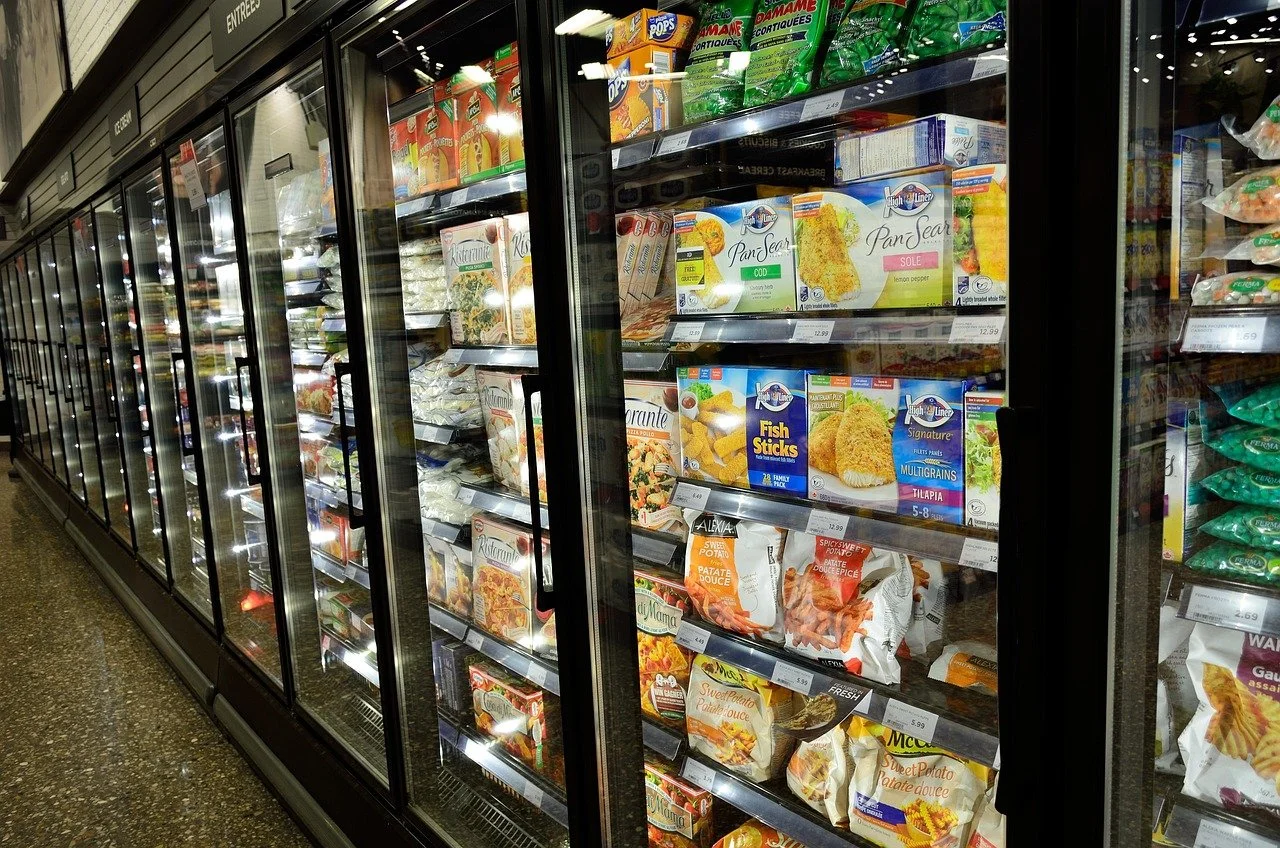
In the frozen section, you look beyond calories and scan for protein, fiber, sodium, and ingredient quality. Some meals are surprisingly balanced. Others rely heavily on refined starch and stabilizers.
You’re not scanning for perfection.
You’re scanning for alignment.
Does this bread actually center whole grain? Does this yogurt give me protein without unnecessary sugar? Will this frozen meal support a balanced plate tonight?
You begin to see that the grocery store isn’t divided into “good” and “bad.” It’s layered. And with a few seconds of attention, you can move through it differently.
Not with fear or rigidity but with informed choice.
And that is where label reading becomes less about rules — and more about trust.
Nutrition in the Age of Algorithms
Today’s nutrition advice often arrives through short videos, bold claims, and sweeping generalizations. Online nutrition messaging often focuses on single ingredients. One week emulsifiers are the concern. The next week it’s seed oils. Then lectins, oxalates, or carbohydrates. Entire food categories are dismissed. Five-ingredient rules are proclaimed as universal truths.
But health rarely hinges on a single ingredient in isolation. It’s shaped by patterns.
If most of your intake consists of minimally processed foods with adequate protein, fiber, and micronutrients, occasional additives matter far less. If most of your intake comes from highly engineered products, the cumulative effect becomes more relevant.
When you learn to read labels thoughtfully, you become less vulnerable to extreme messaging. Label reading gives you pattern recognition and that builds autonomy.
A Simple Shift That Changes Everything
If you take nothing else from this, take this: flip the package over. Try it the next time you’re at the store.
Pick up the package, turn it over, and read the ingredient list. Notice the first three ingredients and ask yourself whether they resemble food.
Then glance at added sugars, fiber, and protein. Notice sodium. Compare it to another brand on the shelf.
That’s it. You don’t need to analyze every micronutrient - you just need clarity.
Within 30 seconds, you’ll know far more than the front of the package intended to tell you.
The Bigger Picture
You don’t have to empty your pantry tonight. You don’t have to eliminate every packaged food.
Choose one category — yogurt, bread, cereal, tomato sauce — and compare two versions. Select the one that more closely resembles food. Repeat that process next week in a different aisle.
Small shifts compound over time.
Awareness leads to confidence. Confidence leads to consistency. Consistency leads to change.
And it all begins in the aisle, with a package in your hand, and a willingness to turn it over.
For a more in depth dive into this topic read my blog “Clean Eating Starts with Reading the Food Label: How to Choose the Best Packaged Foods”.
Let’s get cooking!
With the label insights in hand, you can shop and cook more intentionally. Choose minimally processed ingredients, swap packaged items for fresh alternatives when possible, and build meals around foods you recognize and trust. Small changes add up to a more nourishing kitchen routine.
Easy Tuna Noodle Casserole
If you're craving comfort food but trying to stick to clean eating, this healthier Tuna Noodle Casserole proves you can have both. It’s creamy, satisfying, and full of familiar flavors — but made with real, recognizable ingredients that support a wholesome lifestyle.
The secret? Knowing how to read food labels so you can choose packaged staples that align with your goals. This recipe takes advantage of time-saving pantry items like dried pasta, canned tuna, and frozen peas — but skips the processed shortcuts like canned soup. Instead, a light, homemade sauce made from chicken stock and milk keeps things nourishing without sacrificing flavor.
Fresh veggies like mushrooms, carrots, celery, and onions add texture, color, and extra nutrition. And since the noodles cook right in the casserole, there’s no boiling required — making this dish as convenient as it is comforting.
Whether you’re feeding your family or batch-cooking for the week, this easy tuna casserole is a perfect example of how clean eating and convenience can absolutely go hand in hand.

Easy Tuna Noodle Casserole
Ingredients
- 1 tbsp butter or olive oil
- 1/4 cup small diced onion
- 1/4 cup small diced celery
- 1/4 cup small diced carrot
- 4 oz fresh mushrooms, sliced (or 4 oz. can, drained)
- 1 clove garlic, minced
- 1 1/2 cups chicken stock (low sodium)
- 1 1/2 cups milk (whole or 2% recommended)
- 4 tsp all-purpose flour
- 1/2 tsp salt (adjust to taste)
- 1/4 tsp black pepper
- 1/4 tsp dried thyme
- 6 oz (about 4 cups) uncooked egg noodles
- 2 cans (5 oz) tuna in water, drained
- 1 cup frozen peas
- 2 tbsp fresh parsley, chopped (plus more for garnish)
- 3/4 cup shredded cheddar cheese
- 1/4 cup breadcrumbs or crushed crackers (optional, for topping)
Instructions
- Preheat oven to 375°F (190°C). Grease an 8x8-inch baking dish.
- In a skillet, melt butter or heat oil over medium heat. Add onion, celery, and carrot and sauté 2–3 minutes until starting to soften.
- Add fresh mushrooms (if using) and garlic, cook until mushrooms are golden and vegetables are tender, about 5 minutes.
- In a large bowl, whisk together chicken stock, milk, flour, salt, pepper, and dried thyme until flour is dissolved.
- Add uncooked noodles, drained tuna, sautéed vegetables, frozen peas, canned, drained mushrooms (if using) and chopped fresh parsley to the milk mixture in the bowl. Stir gently to combine.
- Pour the casserole mixture into the prepared baking dish, smooth into an even layer, and cover tightly with foil. Bake for 20 minutes.
- Remove the foil and gently stir the casserole making sure the noodles are submerged. Recover with the foil and bake another 20 minutes.
- Sprinkle cheese and breadcrumbs/crackers on top.
- Bake uncovered for another 10–15 minutes, until the top is golden.
- Garnish with extra fresh parsley if desired when serving.
Mediterranean Chicken
This Mediterranean Chicken skillet is a vibrant, rustic one-pan meal that brings big flavor with simple, budget-friendly ingredients. Lightly browned chicken breasts simmer gently in a savory blend of onions, sweet peppers, garlic, Italian seasoning, and a whisper of bay.
Chickpeas, seasoned tomatoes, artichoke hearts, caper berries, and olives create a hearty, vegetable-forward base that’s rich in texture and classic Mediterranean character. A small amount of rice cooks directly in the broth, soaking up the aromatic flavors and making the dish both satisfying and economical. Anchovies melt into the sauce for optional depth and umami without overpowering the dish.
Just before serving, fresh greens and a splash of red wine vinegar brighten everything, adding freshness and balance.
The result is a colorful, nourishing skillet dinner that feels both comforting and lively—perfect for easy weeknights, meal prep, or anyone wanting a wholesome Mediterranean-inspired meal made with accessible pantry staples.
Mediterranean Chicken
Ingredients
- 1 lb boneless, skinless chicken breasts
- 1 tbsp olive oil
- 1 cup sliced onions
- 1 cup sliced sweet peppers
- 4 cloves garlic, minced
- 1 ½ tsp italian seasoning
- 1 bay leaf
- 1 tbsp fresh chopped parsley
- 2 - 3 tsp caper berries
- 2 anchovy filets (optional)
- 1 (14 oz) can chickpeas, drained and rinsed
- 1 (14 oz) can italian seasoned diced tomatoes
- 1 (14 oz) can quartered artichoke hearts in water, drained
- 8 pitted Kalamata olives, chopped
- ½ cup rice
- 2 cups chicken or vegetable stock
- Salt and pepper to taste
- 2 tsp red wine vinegar
- 1 bunch curly endive or escarole, torn into small pieces (or kale or collard greens)
Instructions
- Heat the olive oil in a large skillet over medium high heat. Add the chicken breasts and brown lightly on each side. Remove to a plate and set aside.
- Reduce the heat to medium and add the onions, sweet peppers, and garlic to the pan. Saute until they begin to soften, about 2 minutes.
- Add the remaining ingredients (except for the red wine vinegar and greens) and bring to a boil.
- Add the chicken breasts back into the pan. Reduce the heat to a simmer and cover. Cook for 15 - 20 minutes until the chicken is cooked through and the rice is tender.
- Stir in the greens and red wine vinegar. Reseason with salt and pepper as needed and finish simmering until the greens are tender.
There you have it!
Understanding labels gives you clarity, not stress. Focus on patterns over perfection, and let your meals reflect your values and taste.