
Unlocking Time: How Strategic Meal Windows Support Longevity and Metabolic Health
Have you ever reached the end of a long day and realized you never really ate a full meal—you just grazed your way from morning to night? A coffee here, a few bites there, a late dinner because the evening got away from you… and then you wonder why your energy is crashing, your sleep feels off, or your hunger cues seem louder than usual.
You’re not alone. 😊
Most of us think of “nutrition” as a conversation about what we eat. But one of the most overlooked, underappreciated, and deeply researched pillars of metabolic health, longevity, and even weight stability is not the what — it’s the when.
And here’s the interesting part: This isn’t a new idea or a trending fad. Cultures with some of the longest-living people on earth have been naturally practicing this for generations… long before the phrase time-restricted eating ever existed.
And no, this isn’t about strict fasting or punishing rules. This is about rhythm, about aligning with the way your body naturally wants to function.
In fact, if you look at places like Okinawa, Ikaria, or Nicoya, Costa Rica — the famous Blue Zones where people routinely live into their 90s and beyond — you’ll notice something subtle but consistent: They don’t eat over a 15-hour grazing window. They eat within a natural, condensed rhythm that supports their biology.
And amazingly, modern science is catching up and confirming what these long-lived cultures have been doing all along. There’s a growing field called chrononutrition, and it looks at how our metabolism, hormones, hunger cues, and daily rhythms respond not only to food itself, but to the timing of food. And once you hear the science — and the stories — it becomes hard not to see the difference meal timing makes.
Today, let’s walk through this together — in a way that blends modern science, real-life rhythm, and the gentle wisdom we can borrow from Blue Zones and long-lived cultures around the world.
Why “When You Eat” Matters More Than Most People Realize
Have you ever noticed that a late-night snack hits differently than a mid-morning breakfast? Or that after-dinner grazing never quite satisfies (yet still feels irresistible)?
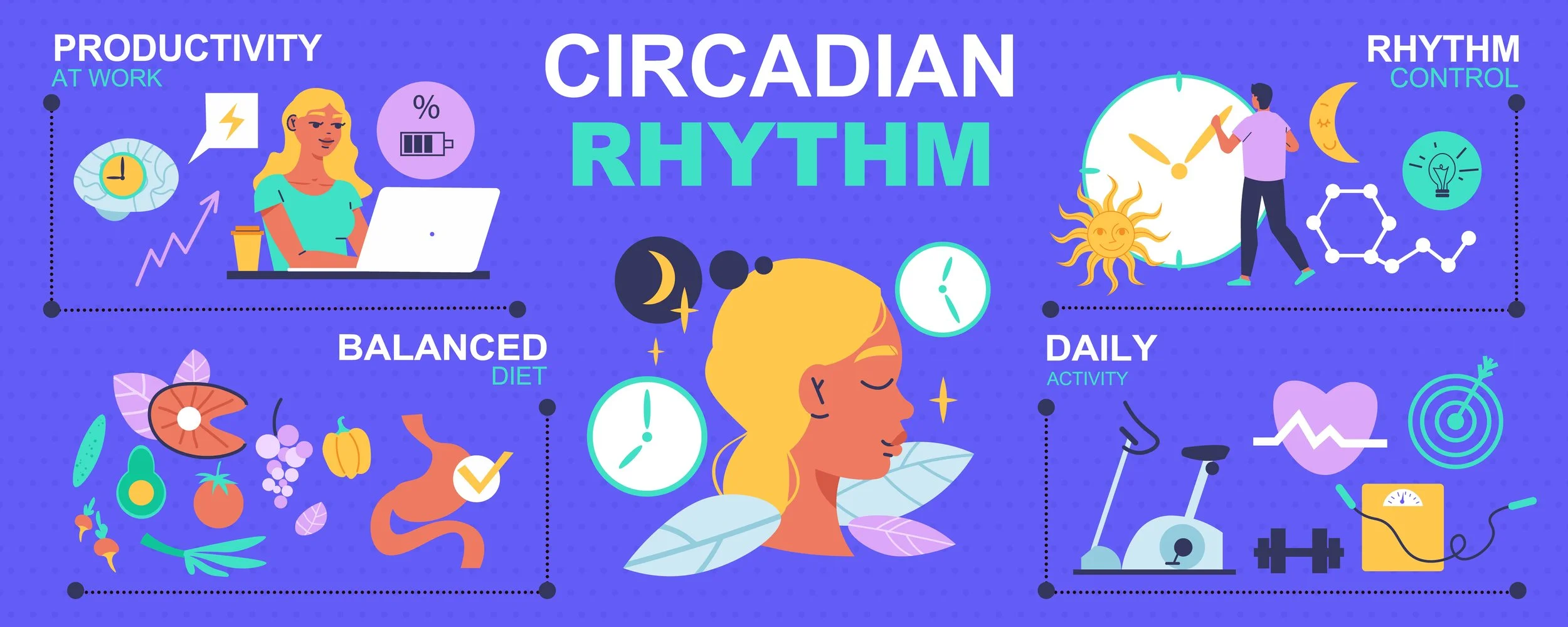
There’s a biological reason. Your body runs on a 24-hour internal clock, called the circadian rhythm that helps regulate sleep. But what most people don’t realize is that your metabolism runs on this clock too.
Modern research confirms this:
We handle carbs and fats better earlier in the day
Insulin sensitivity drops later in the afternoon
Digestive enzymes decline in the evening
Late-night eating increases metabolic stress
Eating over long periods disrupts circadian rhythms
Shortening the eating window improves metabolic markers even without changing calories
It regulates:
How efficiently you digest food
How your body handles sugar
Your hunger and fullness hormones
When your cells repair and clean themselves
How well you burn fuel versus store it
Your inflammation levels
Even your energy throughout the day
Your body expects food during daylight hours, movement throughout the day, and rest (not digestion) at night. When eating patterns drift late into the evening or scatter across 15 waking hours, metabolism gets confused. Hormones get noisy. Hunger becomes unpredictable. Your sleep gets shallower. Your energy drops.
This isn’t about eating less. It’s about eating in a rhythm your biology understands.
What Actually Happens During the Hours You’re Not Eating
This is the part most people find surprising.

During fasting windows (usually at least 12 hours), you’re not just “not eating.” Your body is shifting into:
Fat-burning mode
Repair and cleanup mode (autophagy)
Reduced inflammation and oxidative stress
Improved metabolic flexibility
These aren’t fringe theories — they’re backed by a solid body of literature, including studies on circadian biology and fasting-related cellular repair mechanisms.
Think of it like this:
When you shorten your eating window, you’re clearing space for your body to do the behind-the-scenes work that keeps you healthy for the long haul.
What Time-Restricted Eating (TRE) Actually Means
Time-Restricted Eating (TRE) simply means choosing a consistent daily eating window—usually 8–12 hours long—and sticking to that most days of the week.
This isn’t fasting in the extreme sense. You’re not skipping food for a day. You’re not counting calories. You’re not dieting.
You’re giving your body a defined rhythm.
8-hour eating window examples:
8 am – 4 pm
10 am – 6 pm
11 am – 7 pm
Whatever window aligns with your life.
During your non-eating hours, your body finally gets the long exhale it needs to repair, stabilize blood sugar, reduce inflammation, and reset your metabolic hormones.
Think of it like letting your kitchen close for the night so it can be cleaned and ready for tomorrow. You’re not restricting. You’re restoring.
What Blue Zones Teach Us About Natural Eating Rhythms
The world’s longest-living people aren’t tracking eating windows or following health influencers. They simply live in a way that honors natural cycles:
They eat real, whole foods.
They rarely eat late into the night.
They gather for meals and walk afterward.
They give their bodies long stretches of non-eating each day without thinking about it.
They’re not restricting — they’re rhythmic.

Okinawa, Japan Breakfast is often light or skipped. The largest meal (like this soba dish) tends to be midday. Evening meals are early and modest. Their natural eating window often falls within 8–10 hours.
Sardinia, Italy and Ikaria, Greece Meals are tied to sunlight. Families eat the biggest meals earlier. Evening meals are small and early — and often shared in community. Meals are social—rarely rushed.
Nicoya, Costa Rica Early breakfasts, early dinners, and spend long periods of evening socializing without food.
Loma Linda, California Many Seventh-day Adventists eat two main meals — a mid-morning breakfast and an early afternoon lunch — creating a natural fasting window of 14–16 hours.
No one calls it TRE. It’s simply rhythm. Life being lived in harmony with light, activity, and social patterns — not late-night screens and 9 p.m. “second dinners.”
This is TRE in its most human form.
The Science of TRE — Explained Simply and Clearly
I know you want research, but not in a dry, “I need a lab coat to understand this” way. So here’s what studies consistently show — in plain language:
Better Insulin Sensitivity & Blood Sugar Regulation When insulin levels stay elevated (from frequent eating), your body gets stuck in “storage mode.” TRE allows insulin to fall, restoring metabolic flexibility. This allows your body to tap into stored fat more easily. Studies show TRE improves fasting glucose, insulin sensitivity, HbA1c in prediabetic adults, and fat burning capacity. Even without calorie changes.

Enhanced Cellular Repair (Autophagy)
During fasting, your body turns on a process called autophagy - clearing damaged proteins and removing worn-out cell parts. This isn’t woo.
It’s foundational to longevity research. When you’re not digesting, your cells finally get to perform this “housekeeping” that supports longevity pathways and reduces inflammation. Autophagy is linked to healthier aging and reduced risk of chronic disease.
Hormonal Balance & Hunger Regulation People who use TRE often report more consistent hunger, fewer cravings, better energy, and more stable moods. Research shows TRE supports a natural rise and fall of ghrelin (hunger hormone), leptin (fullness hormone), cortisol, melatonin, and growth hormone. Women in midlife especially benefit when hunger cues become predictable again.
Better Weight Regulation Most people think TRE works because it creates a calorie deficit. But interestingly, studies show TRE improves weight, waist circumference, and body fat composition even when calories are held steady. Why? Because your physiology becomes more efficient.
Muscle Preservation (When paired with protein) Contrary to fears, TRE does NOT lead to muscle loss when meals are structured well. Research shows fat mass decreases, lean mass is preserved, and strength training enhances the effect. Your eating window simply organizes your fuel — it doesn’t limit your strength.

Better Digestion & Less GI Stress
The gut is not built to be “on” 16–18 hours a day.
TRE allows motility to reset, the gut lining to repair, your microbiome to thrive, and a reduction in inflammation. You’re not “starving” your gut. You’re giving it peace and quiet.
Improved Sleep & Evening Calm There have not been a lot of studies regarding TRE and sleep quality and these studies had mixed results. It is known though that eating late at night increases heart rate, restlessness, overnight blood sugar spikes, night sweats, and poor REM sleep. Studies substantiate this effect leading to a conclusion that stopping eating early in the evening is helpful for better sleep. TRE brings back the quiet evenings your nervous system craves.
Choosing an Eating Window That Aligns With Real Life
This is where I like to slow down and talk as a coach. Your eating window should support your life, not disrupt it. The science points to some consistent patterns, but this is where I always encourage personalization.
Most researched and sustainable windows:
16:8 (most common)
14:10 (great for beginners or those with higher hunger variability)
12:12 (minimum for autophagy and circadian alignment)
If you’re a morning person, an 8 am to 4 pm window might feel wonderful. If you work later or enjoy family dinners, 10 am to 6 pm or 11 am to 7 pm could be perfect. Personally, I practice a 10 am to 7 pm schedule as much as possible.
Here are some gentle guidelines:
Keep your window consistent. Your circadian rhythm thrives on routine.
Finish eating at least 2–3 hours before bed. This one matters more than people think. Your body doesn’t want to be digesting while trying to sleep.
Front-load your calories when possible. Even Blue Zone cultures tend to eat their largest meals earlier in the day.
Don’t obsess about perfection. Life happens. Social events happen. Holidays happen. Just return to your rhythm the next day.
Focus on meal structure, not restriction. Instead of snacking your way through an eating window, aim for complete meals.
This stabilizes your hunger, metabolism, and energy beautifully.
So instead of thinking:
“I should fast until noon.”
Try:
“What would a consistent eating window look like in my life?
And how can I shift it earlier even by an hour or two?”
You don’t need to start extreme. Just start intentional.
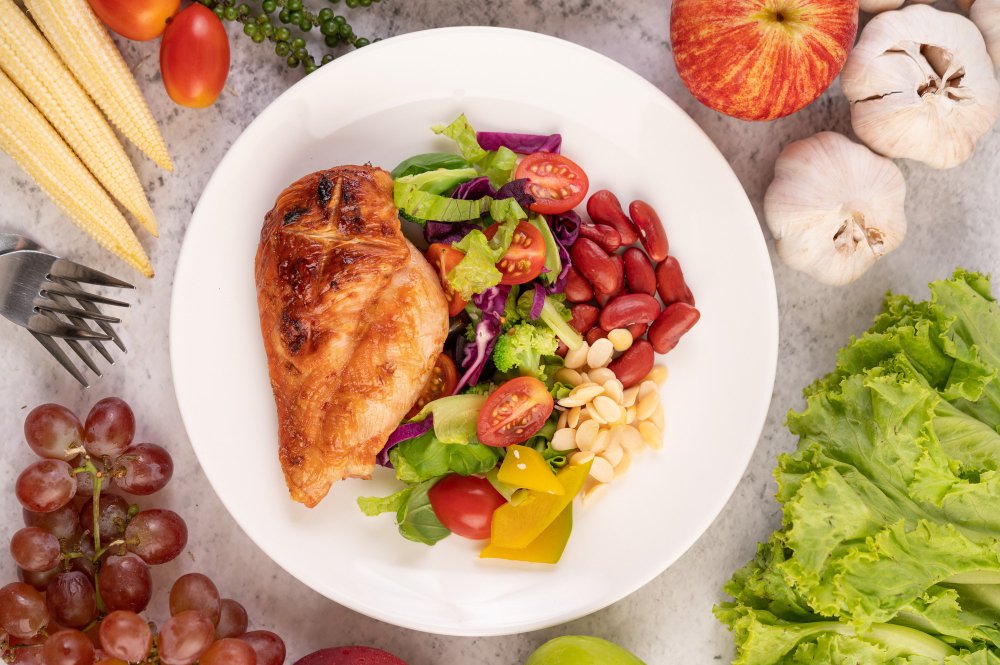
TRE Isn’t About Eating Less — It’s About Eating Intentionally
This is the piece many people miss. It’s where TRE stops being abstract and becomes a daily practice. Remember TRE is not a diet, calorie counting, or “earning” food. It’s simply a natural rhythm that aligns with your circadian rhythm.
One of the biggest mistakes people make is using an eating window to justify grazing or under-eating. Instead, focus on two to three balanced meals inside your window so that TRE feels nourishing and not restrictive.
Protein at every meal Supports muscle retention and stable blood sugar.
Abundance of color Vegetables, fruits, herbs — the plants that feed longevity.
Slow carbs or whole grains Steady energy, better hormonal support.
Healthy fats Satiety + long-lasting energy.
Fiber Critical for digestion and fullness.
You don’t need to micromanage this. If you can commit to eating within a window — and eating meals that actually satisfy you — your body tends to take care of the rest

Finding Your Best Eating Window
The goal is not perfection. It’s observing your life and creating a rhythm that feels supportive.
Here are the coaching questions I often ask clients:
When do you naturally feel most hungry?
When is dinner with your family or partner?
Do you sleep better when you stop eating earlier?
When does your energy dip?
When do cravings show up?
Do you feel better with a long, calm evening?
Your body will guide you if you listen.
A Gentle Way to Start (No Shock to the System Needed)
If you’re curious how an eating window might support your own health, try this simple on-ramp:
Step 1: Track your current eating window for a few days.
You might be surprised — most people eat over a 14–16 hour span without realizing it.
Step 2: Choose a window that fits your life.
Not your friend’s life. Not the internet’s life. Yours. Start with a 10-12 hour window and see how you feel.
Step 3: Gently compress it.
Move your start or end by 15–30 minutes every few days. Many people find moving their last meal earlier works well.
Step 4: Hold Steady
Aim for consistency 4–5 days per week.
Step 5: Pay attention to energy, hunger, mood, and sleep.
Your body will tell you a lot.
Step 6: Adjust
If you feel great, keep going. If you feel stressed or underfed, expand your window. TRE should feel supportive — not punishing.
Give it a few weeks as rhythm takes time to settle in. You’re not looking for perfection - just consistency. Don’t stress over interruptions. If you have a holiday party or a dinner with friends, your metabolic health won’t implode. It’s the pattern, not the exception, that shapes longevity.

Why This Matters for Longevity & Midlife Wellness
As we age, metabolic flexibility naturally declines. Hormones shift. Sleep changes. Stress sometimes increases. Muscle requires more intention to maintain.
TRE is one of the simplest, most elegant tools to support:
Healthy aging
Better energy
Blood sugar balance
Weight stability
Mood regulation
Hormonal ease
Structural rhythm
It’s a foundation, not a fix. A rhythm, not a rule. A way of eating that honors your biology — and your life.
A Quick Note on Risks & Red Flags
TRE may not be ideal for:
Anyone with a history of disordered eating
People with certain medical conditions like diabetes
Very pregnant or very breastfeeding women
Anyone who feels more anxious or preoccupied around food when meals are restricted
Your body should feel supported, not stressed.
Final Thoughts: Rhythm Is a Powerful Form of Self-Care
You don’t have to overhaul everything. You don’t need a “perfect” eating window. You don’t even need to start tomorrow.
But choosing a daily rhythm that supports digestion, rest, energy, and longevity is one of the most impactful ways to nourish your health going forward.
Blue Zone cultures show us this. The research shows us this. And your body will show you this too — if you give it a chance to find its rhythm again.
If life feels scattered, chaotic, or rushed in other areas, an eating window can be the quiet structure that helps anchor everything else.
A gentle internal clock. A supportive daily rhythm. A way of living that feels intentional, grounded, and deeply aligned.
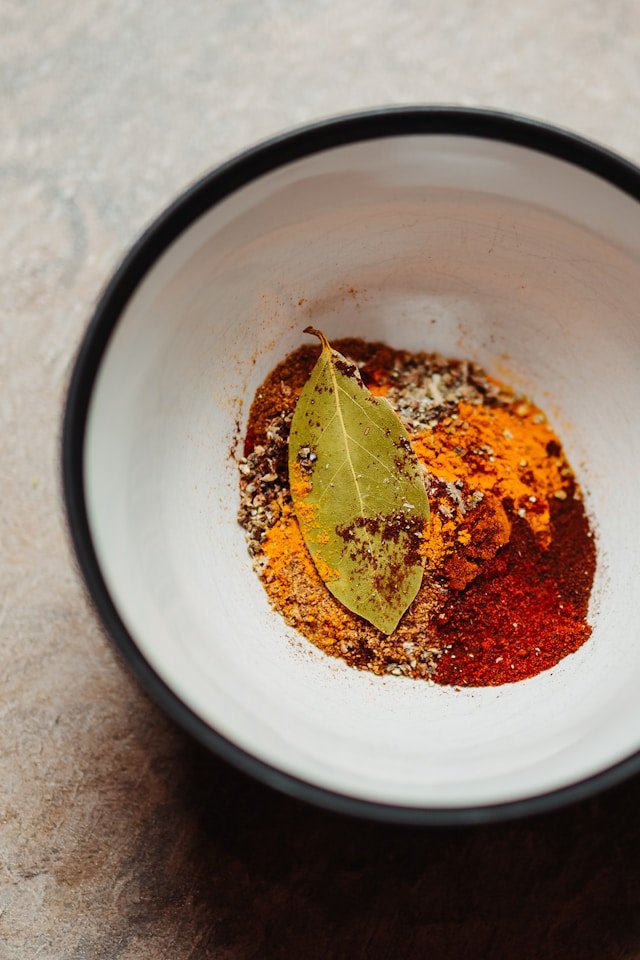
Let’s get cooking!
Spice blends are one of the easiest ways to add instant flavor without pulling out half the pantry—just a sprinkle and you’re done. But making your own takes things to a whole new level. You control the freshness, the balance, and the quality, and you can tailor the blend exactly to your taste. No fillers, no mystery ingredients, no flat, dusty flavors. Just a simple, fragrant mix that elevates everything you cook and makes your kitchen feel a little more inspired.
And if you’re looking for a few blends to get started, three of my favorites are chai spice, pumpkin pie spice, and Caribbean jerk seasoning. Each one brings its own personality to the kitchen—from the warm, cozy aromatics of chai, to the nostalgic fall notes of pumpkin spice, to the bold, vibrant heat of jerk seasoning. They’re simple to make, endlessly versatile, and a fun way to explore new flavors without any fuss.
Chai Spice Blend
Chai Spice Blend is a fragrant and warming combination of aromatic spices traditionally used in Indian chai tea. This blend typically includes a harmonious mix of cinnamon, cardamom, ginger, cloves, and black pepper. This version also includes nutmeg and allspice. The result is a complex, rich flavor profile that is both spicy and sweet, with the warmth of cinnamon, the floral notes of cardamom, the zing of ginger, and the subtle heat from black pepper.
Often used in both beverages and desserts, chai spice blend adds a comforting, exotic touch to any dish, evoking a sense of warmth and coziness. Try our Chai Chia Chocolate Pomegranate Pudding or Chai-Spiced Dark Chocolate Bark. This rich medley not only tantalizes your taste buds but also offers numerous health benefits. Each taste of chai warms the soul, boosts digestion, and provides a comforting respite from everyday stress. Whether enjoyed in hot or cold dishes, chai spices create a perfect harmony of flavors that invite you to slow down, savor, and connect with the moment.
Embrace the cozy essence of chai and let its invigorating properties awaken your senses.

Chai Spice Blend
Ingredients
- 2 tbsp ground cinnamon
- 1 tbsp ground ginger
- 1 tbsp ground cardamom
- 1 1/2 tsp ground cloves
- 1 1/2 tsp ground black pepper
- 3/4 tsp ground nutmeg
- 1/2 tsp ground allspice
Instructions
- Combine all ingredients in a small jar and mix well.
Notes
- Feel free to adjust the amounts of each ingredient to emphasize that particular spice.
Pumpkin Pie Spice Blend
This homemade Pumpkin Pie Spice Blend delivers a beautifully balanced mix of warming aromatics—cinnamon for sweetness, ginger for lift, nutmeg for richness, and a hint of clove and allspice for depth. Freshly mixed, it’s far more vibrant and versatile than store-bought blends, elevating both sweet and savory dishes with effortless autumn flavor.
Often sprinkled into everything from lattes to baked goods, pumpkin pie spice blend brings an instant sense of comfort, nostalgia, and autumn warmth. It transforms simple dishes into feel-good favorites—try it in our Pumpkin Chili or Cranberry Walnut Pumpkin Bread for a cozy seasonal twist.
This fragrant mix does more than taste good, it does your body good too. Its blend of cinnamon, ginger, nutmeg, cloves, and allspice has been used for generations to support digestion, circulation, and overall wellness. Each pinch carries a soothing aroma that calms the senses and invites you to slow down, savor, and enjoy the moment. Whether stirred into morning oatmeal or whisked into an evening dessert, pumpkin pie spice adds harmony, depth, and just a hint of magic to your kitchen.

Pumpkin Pie Spice Blend
Ingredients
- 3 tbsp ground cinnamon
- 2 tsp ground ginger
- 2 tsp ground nutmeg
- ½ tsp ground allspice
- 1 tsp ground cloves
Instructions
- Stir together and store in a small airtight jar for up to a year.
Caribbean Jerk Seasoning
Caribbean jerk seasoning is a bold, flavorful blend that comes from Jamaica and is used all across the Caribbean. It’s known for being spicy, a little sweet, and full of warm, aromatic spices. You’ll usually see it on chicken or pork, but it works just as well on seafood, tofu, or veggies.
The seasoning typically includes Scotch bonnet peppers (or habaneros), which bring the heat, and allspice, which gives it that warm, slightly sweet edge. Add in thyme, garlic, onion, and sometimes cinnamon, nutmeg, or clove, and you get a complex, layered flavor. A bit of brown sugar helps balance the heat, and other ingredients like ginger, paprika, or citrus zest might be mixed in, depending on the recipe.
You can use jerk seasoning as a dry rub or make it into a marinade with things like vinegar, lime juice, or soy sauce. Traditionally, it’s cooked over pimento wood, which adds a distinctive smoky flavor.
As for the name “jerk,” it actually goes way back. It likely comes from the Spanish word “charqui”—which comes from an even older indigenous word—that means dried or preserved meat (like what we now call jerky). Over time, especially in Jamaica, “jerk” came to mean not just the seasoning, but the whole method of cooking—usually slow-roasted or grilled over an open flame.
That method was developed by the Maroons, who were Africans that escaped slavery and created new communities in the mountains. They blended African cooking techniques with local Caribbean ingredients and traditions. So today, when you hear "jerk chicken" or "jerk pork," it’s not just about the spices—it’s about a whole style of cooking that’s rooted in history, culture, and survival.
In short, jerk is spicy, smoky, deeply flavorful—and it tells a story that goes way beyond the plate. Try the seasoning below in our Caribbean Spinach Salad with Jerk Shrimp & Hot Bacon Dressing.

Caribbean Jerk Seasoning
Ingredients
- 1 tbsp onion powder
- 1 tbsp garlic powder
- 2 tsp smoked paprika (or regular)
- 2 tsp dried thyme
- 2 tsp dried parsley
- 2 tsp brown sugar (or coconut sugar)
- 1 tsp ground allspice
- 1 tsp ground cinnamon
- 1 tsp ground nutmeg
- 1 tsp cayenne pepper (adjust for heat preference)
- 1 tsp ground black pepper
- 1 teaspoon salt
- ½ tsp crushed red pepper flakes (optional, for extra kick)
- ½ tsp ground ginger
Instructions
- Combine all ingredients in a small bowl or spice jar.
- Mix well to ensure even distribution.
- Store in an airtight container in a cool, dry place for up to 6 months.
Notes
- For a marinade: Add 2 tablespoons of the seasoning to 1–2 tablespoons of oil, 2 tablespoons soy sauce or tamari, juice of 1 lime, and a splash of vinegar.
- Use as a rub: Sprinkle generously over protein or vegetables before grilling, roasting, or pan-searing.
There you have it!
There’s no perfect eating window and no single “right” rhythm—only the one that supports you best. Consider this an invitation to slow down, tune in, and shape a daily pattern that helps you feel more steady, nourished, and aligned.