
Simple Ingredients: A Thoughtful Approach to a Cleaner Home
We spend a lot of time thinking about wellness in terms of what we eat, how much we move, whether we're getting enough sleep, and how we manage stress. Those things matter. But wellness also includes something we may not think about quite as often—the environment we live in and how we take care of it.
Take a look under the kitchen sink or in the laundry room and you may find a cleaner for glass, another for countertops, one for the bathroom, something for the floors, a disinfecting spray, maybe a stainless-steel cleaner, and a few bottles that have been there so long you've forgotten why you bought them in the first place. Somehow, cleaning the house has come to require quite a collection.
That makes household cleaning worth looking at through a wellness lens too. The products we use become part of our indoor environment, and their ingredients can affect the air we breathe, the surfaces we touch, and what eventually makes its way into the larger environment.
So it raises a worthwhile question: Is there a healthier way to clean?

For many everyday jobs, there may be. Soap, water, vinegar, baking soda, Castile soap, and a few other simple ingredients can do a surprising amount of work when they're used for the jobs they do best. They give us another option for keeping the house clean while being a little more thoughtful about what we use around ourselves, our families, and our environment.
There are also times when a commercial cleaner is the better tool for the job. So we'll look at what common cleaning ingredients do, how they may affect our health or the environment, and where simpler alternatives can work just as well. If a simple cleaner can do the job well, there may be no reason to reach for something stronger. And when we do need a stronger product, understanding what it does and how to use it safely helps us make a better choice for both our home and our health.
Why Pay Attention to What We Clean With?
Most of us use cleaning products without giving them much thought. We spray the counter, scrub the sink, mop the floor, toss a pod into the washer, and move on with the day. But unlike a product we use once in a while, household cleaners are part of our regular environment. We may use them several times a week, sometimes every day, often in kitchens, bathrooms, bedrooms, and other spaces where we spend a lot of time.
That repeated exposure is one reason the ingredients are worth understanding.
Some products contain strong acids or alkaline ingredients that can irritate or burn skin and eyes if they're mishandled. Others contain solvents, fragrances, or volatile compounds that can move into the air while we clean. The American Lung Association notes that some household cleaning products release volatile organic compounds, or VOCs, and recommends good ventilation and reducing unnecessary exposure to strong fragrances and respiratory irritants when possible.

There are also ingredients that raise longer-term questions. Certain phthalates have been associated with endocrine and reproductive concerns. Formaldehyde is a known human carcinogen and can be used as a preservative in some household consumer products, including cleaners. Some disinfecting ingredients are very effective when we truly need them, but they can also irritate the skin, eyes, and respiratory system. And ingredients such as phosphates and some surfactants can have consequences beyond our homes when they make their way into waterways.
None of this means that every bottle under the sink is dangerous. The more useful point is that cleaning products are not all interchangeable, and stronger is not always better.
The dose matters. The concentration matters. How often we use a product matters. Whether we spray it into the air or wipe it directly onto a surface matters. Ventilation matters. And, perhaps most importantly, whether we actually need that level of cleaning power matters.
Once you begin looking at cleaners this way, the question shifts from Which product is strongest? to What is the simplest, healthiest option that will still do the job well?
Cleaning, Sanitizing, and Disinfecting Are Not the Same Thing
One reason we may reach for stronger products than we need is that the words clean, sanitize, and disinfect often get used as though they mean the same thing. They don't—and knowing the difference can make everyday cleaning much simpler.
Cleaning removes dirt, grease, food residue, and many germs from a surface using soap or detergent, water, and a little physical effort.
Sanitizing reduces the number of germs to a level considered safe.
Disinfecting goes a step further by using a product designed to kill specific microorganisms.
For most of the everyday cleaning we do at home, cleaning is often enough. According to the CDC, regular cleaning with soap or detergent and water removes most germs from household surfaces, and additional disinfecting usually isn't necessary unless someone in the home is sick or at greater risk of becoming ill.
That distinction can change the way we look at the products under the sink. Wiping crumbs and fingerprints from the kitchen table is a very different job from cleaning a surface that has been contaminated by raw chicken or used by someone who is ill.
Sometimes we really do need a disinfectant. But much of the time, what we need is simply a cleaner that can loosen dirt and grease and help us wipe it away.
And that leads to another useful thought: a stronger cleaner isn't automatically a better cleaner. The best choice is the one that matches the job we're actually trying to do.
What's Actually in the Bottle?
Reading the ingredient list on a household cleaner can feel a little like reading a chemistry textbook. There are long names, unfamiliar terms, and ingredients that don't mean much unless you already know what job they are there to do.
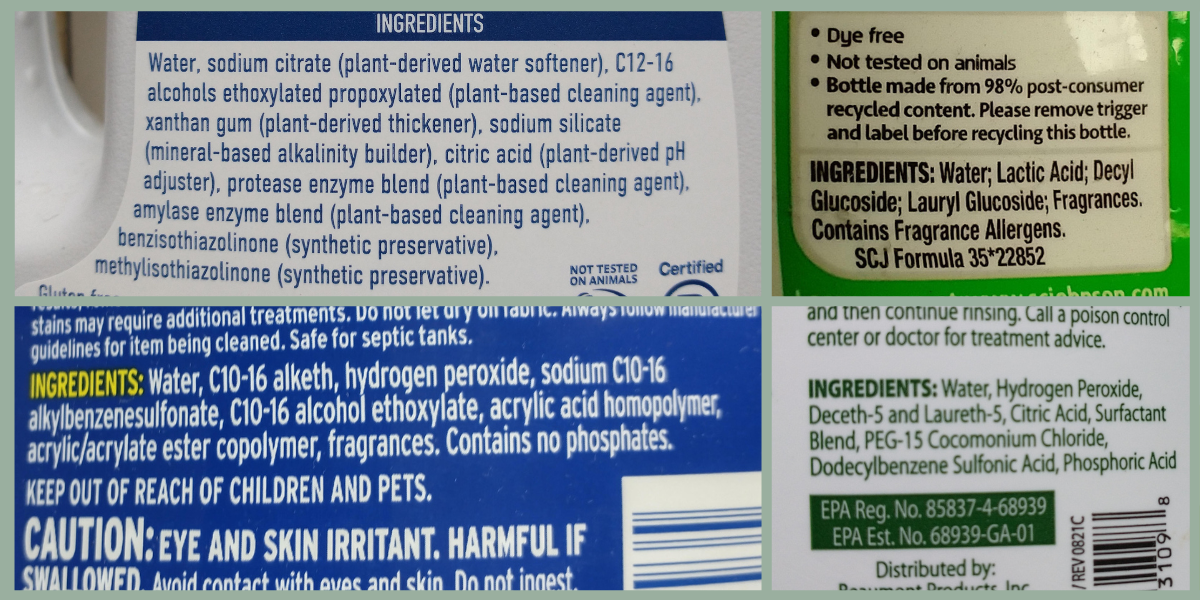
That is why it helps to think less in terms of “good” and “bad” ingredients and more in terms of function. What is this ingredient doing in the product? Is it there to lift grease, dissolve residue, kill germs, preserve the formula, add fragrance, or simply make the cleaner look or smell a certain way?
The EPA's Safer Choice program evaluates cleaning ingredients in much the same way, grouping them by function and looking at both human-health and environmental considerations.
Understanding a few of the main categories makes those labels much easier to navigate.
Surfactants: The Ingredients That Help Lift Dirt Surfactants are some of the hardest-working ingredients in a cleaner. They help water spread more easily and surround grease and dirt so it can be rinsed or wiped away.
Two names you may recognize are sodium lauryl sulfate (SLS) and sodium laureth sulfate (SLES). They sound nearly identical, but they are different ingredients. Both are used because they clean well and help products foam and spread.
SLS can irritate skin and eyes, especially at higher concentrations or with prolonged exposure. SLES is often used in formulations designed to be somewhat milder. Other products use different surfactants, including plant-derived glucosides.
The useful thing to remember is that a chemical-sounding name doesn't automatically make an ingredient unsafe, and “plant-derived” doesn't automatically make one harmless. Concentration, exposure, and how the product is used all matter.
There is an environmental side to surfactants too. The EPA considers how readily they biodegrade and whether they may affect aquatic life after they leave our homes and enter wastewater.
Fragrance and Phthalates Fragrance deserves a little extra attention because the word fragrance on a label may represent a mixture of ingredients rather than one specific compound.
Certain phthalates, a family of chemicals used in many consumer products, have raised concerns because some members of the group are associated with endocrine and reproductive effects. Some phthalates may also be found in fragrance formulations.
That doesn't mean every scented cleaner contains phthalates. But for anyone who wants to reduce unnecessary fragrance exposure, choosing a fragrance-free product is a simple place to start.
EPA's Safer Choice program even has a separate Fragrance-Free designation for qualifying products that contain no fragrance materials.
Solvents and VOCs Solvents help dissolve grease, oils, and other substances that water alone may not remove easily.
Some solvents and fragrance ingredients are also volatile organic compounds, or VOCs, which means they evaporate into the air. That is one reason the smell of a cleaning product can fill a room so quickly.
The concern here is not that every VOC is equally harmful. It is that some can irritate the eyes, nose, throat, or lungs, especially in an enclosed space or when a product is heavily sprayed.
The American Lung Association recommends good ventilation while cleaning and reducing unnecessary exposure to strong fragrances and respiratory irritants when possible.
Bleach, Hydrogen Peroxide, and Other Disinfecting Ingredients Some products are formulated not just to remove dirt, but to kill microorganisms.
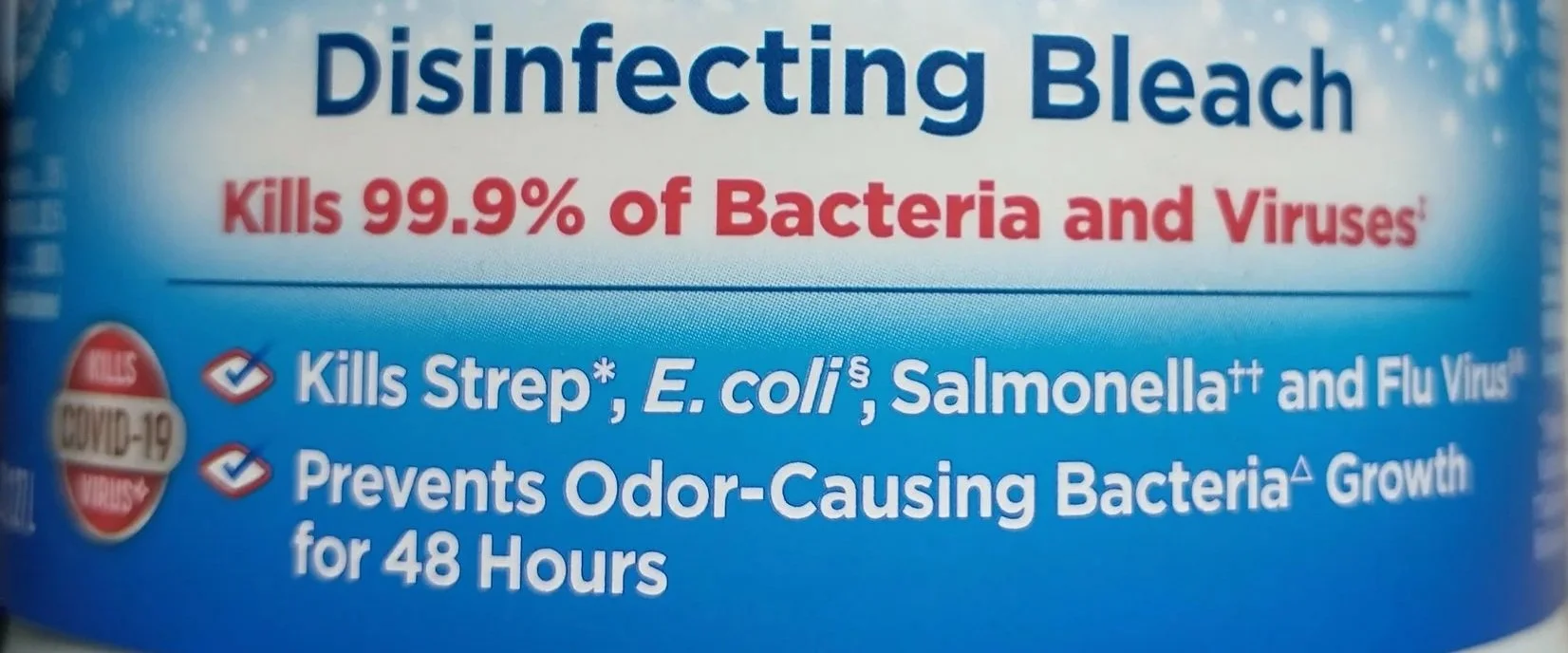
Chlorine bleach is one of the most familiar examples. It is very effective when true disinfection is needed, but it is not necessary for every cleaning job. Wiping grease from a counter or dust from a shelf does not usually require the same product you would use to disinfect a contaminated surface.
Bleach can also irritate the skin, eyes, and respiratory system, so it needs to be handled carefully and used according to label directions.
A helpful way to think about it is this: Bleach is not a bad product. It is a specialized product.
Hydrogen peroxide is the active ingredient in some disinfecting products and can also be useful for certain stains. If you are using a hydrogen-peroxide product to disinfect, choose one labeled for that purpose and follow the directions, including the required contact time.
Quaternary ammonium compounds, often called quats, are also common in disinfecting products because of their antimicrobial activity.
These ingredients all have useful jobs. The question is whether every routine cleaning task actually requires that level of germ-killing power.
Preservatives and Formaldehyde Water-based products need preservatives so bacteria and mold don't grow inside the bottle while it sits on the shelf.
Formaldehyde receives particular attention because it is a known human carcinogen. The EPA notes that formaldehyde can be used as a preservative in some household consumer products, including cleaners.
This is one of those areas where a trusted ingredient resource can be more useful than trying to judge a product from one unfamiliar name.
Dyes Dyes usually have a much simpler job: they make the product look a certain way or help distinguish one formulation from another. They generally don't make the cleaner work better.
That doesn't mean every colorant is harmful, but if you're trying to simplify what comes into the house, an uncolored product is one easy place to reduce an ingredient that often isn't contributing to cleaning performance.
Phosphates Phosphates are worth mentioning for a different reason.
They have traditionally been used to help detergents work more effectively, especially in hard water. The larger concern is environmental. When excess phosphorus reaches lakes and waterways, it can encourage algae growth and disrupt aquatic ecosystems.
Household detergent formulations have changed considerably over the years, so phosphates are less common in many products than they once were. Still, they are a good reminder that the ingredients in our cleaners don't stop mattering once they disappear down the drain.
Taken together, all of this gives us a more useful way to read a cleaning label. Instead of asking, Is this ingredient good or bad? we can ask: What is it doing here, do I need it for this job, and is there a simpler option that can work just as well?
A Small Cleaning Pantry
After looking at all of those ingredients, the good news is that everyday cleaning can be much simpler than the labels make it seem.
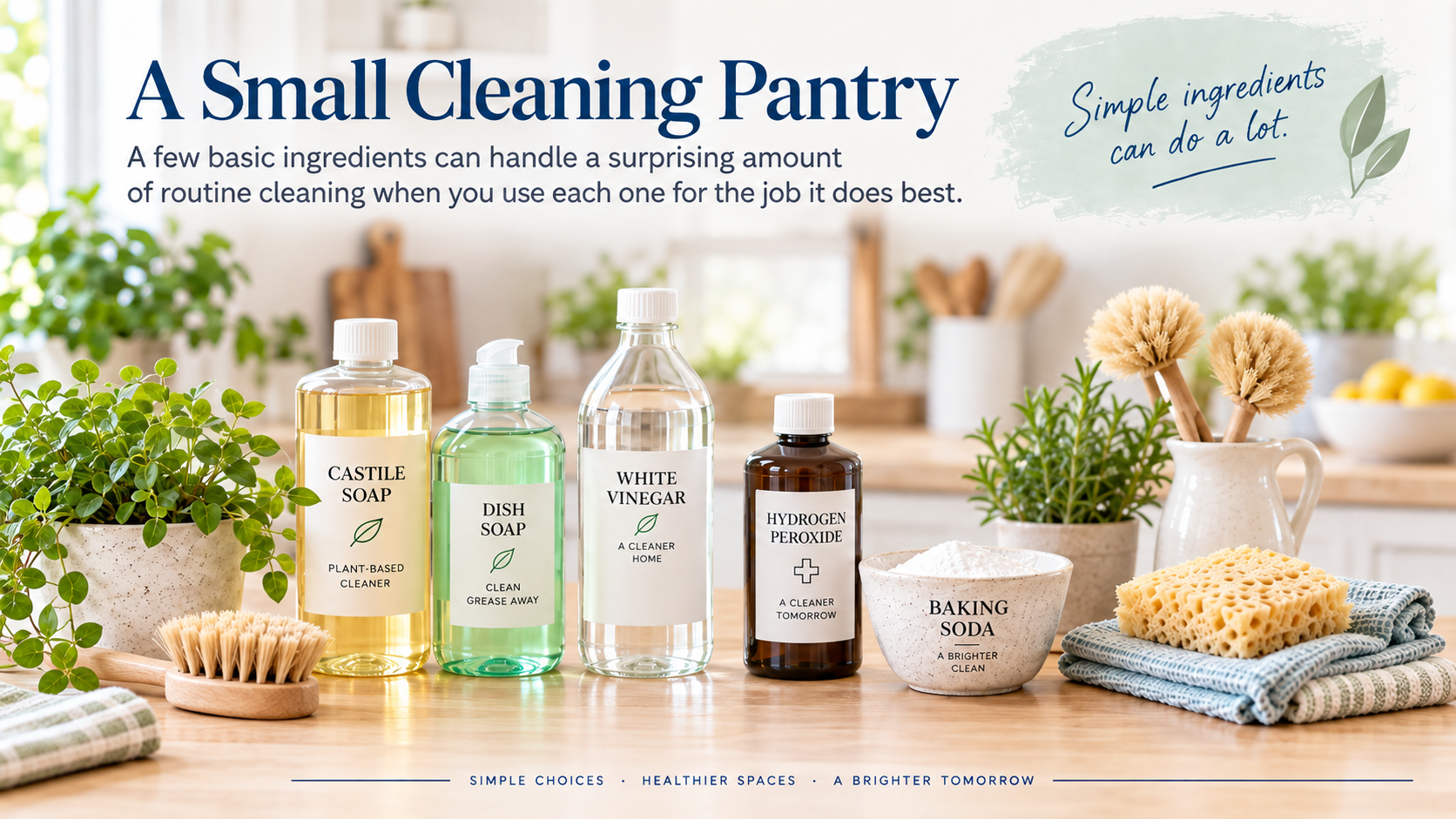
You don't need a long list of homemade recipes or a shelf full of specialty products. A few basic ingredients can handle a surprising amount of routine cleaning when you use each one for the job it does best.
Castile soap — A concentrated vegetable-oil-based soap that loosens everyday dirt and grease. Useful for general surface cleaning, sinks, tubs, and some floors.
Dish soap — Excellent for cutting grease and removing ordinary grime. Useful for counters, tables, cabinet fronts, appliance exteriors, and other washable surfaces.
White vinegar — Its acidity helps dissolve mineral deposits, hard-water spots, and soap residue. Best for glass, some fixtures, and areas with mineral buildup.
Baking soda — A mild abrasive and deodorizer. Useful when a surface needs a little extra scrubbing rather than a stronger chemical cleaner.
Hydrogen peroxide — A more specialized option for certain stains and, when properly labeled for that use, some disinfecting jobs.
Water, time, and friction — Often overlooked, but essential. Warm water, soaking, wiping, scrubbing, and rinsing help simple cleaners do their job.
Putting the Pantry to Work
Castile Soap Castile soap is concentrated, so a little goes a long way. Brands vary in concentration, so follow the dilution directions on the product you use.
It can work well on washable surfaces such as sinks, tubs, cabinet fronts, and some floors. An unscented version is a good choice if you're trying to reduce fragrance.
Dish Soap Before buying anything new, take a look at what is already sitting beside the sink.
Dish soap is designed to cut grease, which makes it useful for far more than dishes. A small amount in warm water can handle fingerprints, food splatters, greasy cabinet doors, appliance exteriors, tables, and many washable countertops.
Start with less rather than more. Too much soap can leave a film and create more rinsing than cleaning.
If you prefer fewer added ingredients, look for a fragrance-free or dye-free version when your current bottle runs out.
White Vinegar White vinegar works especially well when mineral deposits or soap residue are the problem.
Diluted with water, it can be useful on glass, mirrors, some faucets and fixtures, and areas with hard-water buildup. Giving it a little time to sit on mineral deposits can make wiping or rinsing easier.
Vinegar isn't appropriate for every surface, though. Avoid it on natural stone such as marble, limestone, and travertine, and use caution with specialty finishes, grout, and wood.
Baking Soda Baking soda is most useful when a surface needs a little gentle scrubbing. Because it is mildly abrasive, use a light touch and test delicate or glossy surfaces first.
Sprinkle it onto a damp sponge or make a paste with baking soda and just enough water or dish soap to hold it together.
Use it on compatible sinks, tubs, stovetops, cookware, and other areas where dried-on grime needs a little physical help coming loose.
Note: Although vinegar and baking soda fizz dramatically when combined, they largely neutralize one another. They are usually more useful when used separately or sequentially rather than mixed together and stored in a bottle.
Hydrogen Peroxide Hydrogen peroxide is more of a specialty cleaner than an everyday one. The common 3% household solution can be useful for certain stains, but it can discolor fabrics or affect some finishes, so test it first. Keep it in its original opaque container, since light causes it to break down.
If you want to use hydrogen peroxide for disinfecting, look for a product specifically labeled for that purpose and follow its directions.
And don't mix it casually with other cleaning ingredients, particularly vinegar.
Water, Time, and a Little Friction This may be the least glamorous part of the cleaning pantry, but it is one of the most important.
Warm water softens grime. Soaking gives dried-on messes time to loosen. A cloth, sponge, or brush physically lifts debris. Rinsing carries it away.
A greasy cabinet door may simply need warm soapy water and a microfiber cloth. A dried spill may need to sit damp for a few minutes before it wipes away. A sink may need baking soda and a little scrubbing rather than a stronger spray.
Just as technique matters in cooking, technique matters in cleaning too. The product is only part of the job. Choosing the right ingredient—and giving it enough time and physical action to work—can make a simple cleaner surprisingly effective.
A Few DIY Cleaning Ideas That Deserve More Caution
Homemade cleaning tips are everywhere, and some are genuinely useful. Others get repeated so often that they begin to sound like universal solutions when they really aren't.
A little caution can save you from damaging a surface—or expecting a simple remedy to do more than it realistically can.
Drains Baking soda followed by vinegar creates plenty of fizz, but that reaction is not a reliable way to clear a serious clog.
For a slow or blocked drain, physically removing hair or debris, using a drain snake, or following the plumbing manufacturer's recommendations is usually more effective than relying on fizz alone.
Natural Stone Vinegar is useful in many places, but natural stone is one place where it can cause real damage.
Acidic cleaners can etch surfaces such as marble, limestone, and travertine, leaving them dull or permanently marked.
For these surfaces, skip the vinegar and use a cleaner specifically recommended for stone or a mild soap-and-water solution if the manufacturer allows it.
This is a good reminder that a simple ingredient can still be the wrong choice for a particular surface.
Wood Floors and Furniture Wood can be another tricky surface because the finish matters as much as the wood itself.
Too much water can seep into seams or joints, vinegar may dull some finishes, and oil-based homemade mixtures can leave behind residue.
For routine cleaning, use as little moisture as possible and follow the care instructions for the specific finish. When in doubt, a barely damp microfiber cloth is often safer than experimenting with a homemade spray.
Grout and Caulk Bathrooms are one of the places where vinegar gets recommended most often, but repeated acid exposure can be hard on some grout and sealants.
That doesn't mean vinegar can never be used in a bathroom. It simply means the material matters.
For routine cleaning, mild soap and water may be enough. If you're dealing with mildew, staining, or damaged grout, use a product appropriate for that specific problem rather than assuming a stronger acid is the answer.
Electronics and Screens Screens and electronics deserve their own rules because cleaning recommendations vary by device and coating.
Avoid spraying liquid directly onto electronics, and use only the cleaner or alcohol concentration the manufacturer recommends. A soft microfiber cloth lightly dampened with water is often the safest starting point.
The larger lesson with DIY cleaning is the same one we've been using throughout the article: simple can work beautifully, but only when the ingredient matches the job and the surface.
Don't Play Chemist
One of the easiest mistakes to make with household cleaners is assuming that if two products work well on their own, they must work even better together.
That is not always true.
Some combinations simply cancel each other out. Others can create irritating or dangerous fumes. The CDC gives a refreshingly simple rule: don't mix cleaning products or chemicals with each other unless the directions specifically say it is safe to do so.
A few combinations are especially important to know about.
Bleach and ammonia can release toxic chloramine gases that can irritate the eyes and lungs and make breathing difficult.
Bleach and vinegar—or other acidic cleaners can release chlorine gas.
Hydrogen peroxide and vinegar should not be mixed together in the same container because the combination can form peracetic acid, which is irritating and corrosive.
And while Castile soap and vinegar are not dangerous in the same way, they still don't belong together. The acid in vinegar interferes with the soap and leaves you with a less effective cleaner and, often, a cloudy residue.
The takeaway doesn't need to be complicated:
Use cleaning ingredients one at a time unless you are following reliable directions that specifically say they can be combined.
That one habit goes a long way toward keeping simple cleaning both effective and safe.

Sometimes the Commercial Cleaner Is the Better Choice
Simple ingredients can handle a lot of everyday cleaning, but there are times when a commercial product is still the better tool.
If someone in the house is sick, for example, you may need an actual disinfectant rather than a general cleaner. The CDC recommends using an EPA-registered disinfectant or an appropriate bleach solution when disinfection is needed and following the label directions carefully.
There are other situations where a product designed for a specific job simply makes more sense. Mold treatment, dishwasher detergent, laundry detergent, serious drain clogs, oven cleaning, and specialty surfaces may all call for something more targeted than vinegar, baking soda, or soap and water.
That doesn't make the simpler ingredients less useful. It just means they have limits.
The goal is not to make every cleaner yourself. It is to match the product to the job.
For routine cleaning, a simple solution may be all you need. For a tougher or more specialized problem, a commercial cleaner may be the most effective and sensible choice.
Trusted Resources for Choosing and Using Cleaners
You don't have to become a chemist to make a thoughtful choice in the cleaning aisle. Several reliable resources can help you look up ingredients, compare products, understand health and environmental concerns, and decide when a stronger cleaner is actually needed.
EPA Safer Choice This is a good place to start if you want a ready-made cleaner that has been reviewed for both human-health and environmental considerations. Products carrying the Safer Choice label must meet EPA criteria for their ingredients and also perform as intended. The site also allows you to search for products that meet its fragrance-free standard.
EWG's Guide to Healthy Cleaning EWG lets you search specific cleaning products and individual ingredients and compare them based on health and environmental hazard information. Its ratings are best used as a screening and comparison tool rather than as a prediction of your individual risk, which also depends on factors such as exposure, concentration, frequency of use, and personal sensitivity.
CDC Cleaning and Disinfecting Guidance The CDC is especially useful when you want to know whether routine cleaning is enough or whether a surface actually needs to be disinfected. It also provides clear guidance on using bleach and other disinfectants safely.
American Lung Association
This is a helpful resource for understanding how household cleaners, fragrances, sprays, and VOCs can affect indoor air and respiratory health. It also offers practical guidance on ventilation and reducing unnecessary exposure to irritants.Read the American Lung Association's household cleaning guidance
These resources won't make every choice for you, but they can make it much easier to understand what you're buying, what a product is designed to do, and whether a simpler option might work just as well.

Caring for the Place That Holds Our Lives
Wellness doesn't happen only through what we eat, how we move, or how well we sleep. Much of it happens quietly in the spaces where we spend our days.
That makes caring for our home part of the picture too.
The takeaway isn't that every cleaner needs to be homemade or that we should worry about every unfamiliar ingredient. It's that we can become a little more thoughtful about what we use, how often we use it, and whether the job really requires something strong or highly fragranced.
Sometimes the answer may be a commercial product. Other times, soap and water, vinegar, baking soda, or Castile soap may be all we need.
You don't have to change everything at once. The next time a bottle runs out, pause before automatically replacing it. Ask what job it was really doing and whether there is a simpler option that will work just as well.
Over time, the cabinet under the sink may get a little less crowded—and the choices we make for our home may feel a little more connected to the way we think about wellness everywhere else.
The simplest option isn't always the right one, but when it works well, it can be a very good place to begin.

Let’s get cooking!
Just as keeping the house clean doesn’t require a cabinet full of specialized products, cooking well doesn’t have to be complicated either. A few dependable ingredients, some basic techniques, and knowing how to use what you already have can take you a long way.
This week’s recipes keep that same spirit of simplicity in the kitchen: practical, flexible food made with everyday ingredients and meant to fit easily into real life.
Millet Fried Rice
Millet Fried Rice is an easy, flexible side dish that brings whole grains and plenty of vegetables to the table without adding much extra work. Cooked millet takes the place of rice, giving the dish a lightly nutty flavor and tender texture while offering a simple way to use a whole grain that may not show up in everyday meals very often.
It is especially convenient when made with leftover or previously cooked millet and whatever fresh or frozen vegetables you already have on hand. Garlic, ginger, green onion, soy sauce, and toasted sesame oil give it the familiar savory flavor of fried rice, while scrambled egg adds a little richness and protein without making the dish feel too heavy.
Serve it alongside chicken, salmon, shrimp, tofu, pork, or another simple protein for an easy dinner. Or turn the millet fried rice itself into the main dish by adding extra egg, edamame, tofu, cooked chicken, shrimp, or another favorite protein directly to the skillet.
Because the vegetables are completely flexible, it is also a useful clean-out-the-fridge recipe and a practical option for busy days when you want something nourishing without starting from scratch.

Millet Fried Rice
Ingredients
- 3 cups cooked, chilled millet
- 1 tbsp avocado oil or other neutral oil, plus more as needed
- 2 large eggs, lightly beaten
- 1/4 cup finely diced red onion
- 2 cloves garlic, minced
- 1 tbsp fresh ginger, minced
- 2 1/2 to 3 cups mixed vegetables, fresh or frozen
- 3 green onions, sliced, divided
- 3 tbsp soy sauce or tamari
- 1 tbsp toasted sesame oil
- 1 tbsp rice vinegar or lime juice
- 1 tsp honey or maple syrup, optional
- 1/4 tsp black pepper
- Optional: pinch of red pepper flakes or a little sriracha
Instructions
- Heat a large skillet or wok over medium-high heat. Add a little oil, then pour in the beaten eggs.
- Scramble just until set, then transfer to a plate.
- Add the remaining oil to the pan.
- Add the onion and any firm fresh vegetables, such as carrots, broccoli, or green beans, and cook for 3–4 minutes.
- Add softer fresh vegetables or frozen vegetables and continue cooking until crisp-tender and heated through.
- Add the garlic and ginger and cook for about 30 seconds, until fragrant.
- Add the cooked millet to the skillet and stir well, breaking up any clumps.
- Let it cook for 3–4 minutes, stirring occasionally, so it heats through and begins to toast in spots.
- Add the soy sauce, toasted sesame oil, rice vinegar, honey if using, and black pepper.
- Stir well to coat the millet and vegetables evenly.
- Fold the scrambled eggs back into the pan along with most of the green onions. Cook for another minute or two.
- Taste and adjust the seasoning as needed.
- Top with the remaining green onions and serve warm.
Notes
- For the best texture, use cooled millet rather than freshly cooked hot millet.
- This recipe is easy to adapt with whatever vegetables are already in the refrigerator such as peas, carrots, bell peppers, broccoli, mushrooms, corn, green beans, cabbage, edamame, or zucchini.
- If using frozen vegetables, there is usually no need to thaw them first.
- For extra protein and to turn the side dish into a main dish, add cooked chicken, shrimp, tofu, edamame, or leftover pork.
- For a gluten-free version, use tamari in place of soy sauce.
Blueberry Zucchini Protein Muffins
These healthy Blueberry Zucchini Protein Muffins are a simple way to bring together fruit, vegetables, whole grains, fermented dairy, and extra protein in one easy bake. Grated zucchini keeps the muffins tender and moist, while blueberries add natural sweetness and bursts of fresh flavor. A combination of all-purpose and whole wheat flour gives them structure without making them heavy, and plain whey protein powder adds a little more staying power.
Kefir helps keep the crumb soft while also bringing a slight tang that balances the sweetness of the maple syrup and blueberries. The result is a muffin that feels wholesome but still tastes like something you actually want to eat.
They work especially well for breakfast, an afternoon snack, or a convenient grab-and-go option when the day gets busy. Because they freeze well, they are also an easy recipe to make ahead and keep on hand for mornings when there is not much time to cook.
Serve them as they are, or pair one with Greek yogurt, cottage cheese, eggs, or nut butter if you want a more substantial breakfast. They are also a useful way to enjoy zucchini beyond the usual savory dishes, especially when gardens and farmers’ markets are overflowing with it.

Blueberry Zucchini Protein Muffins
Ingredients
- 1 cup all-purpose flour
- ½ cup whole wheat flour
- ½ cup plain whey protein powder
- 1 tsp baking powder
- ½ tspbaking soda
- ½ tsp ground cinnamon
- ½ tsp fine salt
- 2 large eggs
- ½ cup plain kefir
- ⅓ cup maple syrup
- ⅓ cup neutral oil or melted butter
- 1 tsp vanilla extract
- 1½ cups coarsely grated zucchini, lightly squeezed
- 1 cup fresh or frozen blueberries
- 1 tbsp all-purpose flour, for coating the blueberries
- 2 tbsp coarse sugar, optional, for topping
Instructions
- Heat the oven to 375°F. Line a 12-cup muffin pan with paper liners or lightly grease the cups.
- In a medium bowl, whisk together the all-purpose flour, whole wheat flour, whey protein powder, baking powder, baking soda, cinnamon, and salt.
- In a large bowl, whisk the eggs, kefir, maple syrup, oil, and vanilla until smooth.
- Fold the grated zucchini into the wet mixture.
- Add the dry ingredients and gently fold just until only a few streaks of flour remain. Avoid overmixing, since whey protein can make muffins firm when worked too much.
- Toss the blueberries with 1 tablespoon flour, then gently fold them into the batter. The batter will be fairly thick but scoopable.
- Divide the batter evenly among the muffin cups. Sprinkle with coarse sugar, if using.
- Bake for 18–22 minutes, until the tops spring back lightly and a toothpick inserted into the center comes out without wet batter. A little blueberry juice is fine.
- Let the muffins cool in the pan for 5 minutes, then transfer them to a wire rack.
Notes
- Lightly squeeze the zucchini, but do not wring it completely dry. A little moisture helps counter the drying effect of the protein powder.
- Plain whey protein powders vary considerably. When the batter seems unusually stiff, fold in another 1–2 tablespoons kefir.
- Fresh blueberries work best, but frozen berries may be used without thawing. Add them directly to the batter and expect the muffins to need an additional minute or two in the oven.
- Store covered at room temperature for one day or refrigerate for up to five days. The muffins also freeze well for up to three months.
There you have it!
A clean home is really just part of the rhythm of everyday life. It is the kitchen after dinner, the sunlight across a freshly wiped table, the familiar routines that make a space feel cared for.
And sometimes, the simplest ways of doing those things are more than enough.