
The Subtle Art of Cooking with Leeks
There are ingredients that announce themselves the moment they hit the pan—and then there are leeks. They ask for a little more patience, a little more attention, and in return, they offer something softer, more layered. Not bold or overpowering, but steady. The kind of ingredient that doesn’t try to lead the dish, yet somehow becomes the reason it works.
Leeks are often the overlooked cousins of onions, sharing their family but not their notoriety. Leeks are one of the most quietly elegant vegetables in the allium family, with a flavor that is softer, sweeter, and more nuanced than many people expect. They deserve a little more attention than they usually get, not only because they are useful in the kitchen, but because they have a long history, a fascinating personality, and a surprising range of culinary uses. And once spring arrives, their wild cousin, the ramp, enters the scene with a completely different kind of energy: vivid, pungent, fleeting, and beloved.
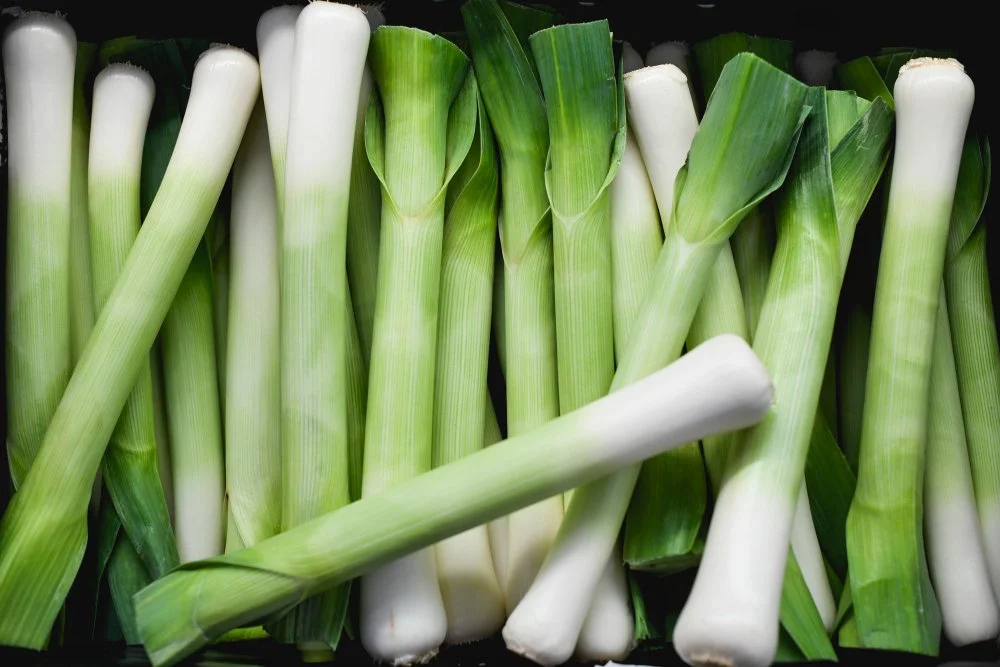
Leeks are the sort of vegetable that reward a slower appreciation. They do not announce themselves with the sharp bite of raw onion or the aggressive perfume of garlic. Instead, they bring a mellow sweetness, a silky texture when cooked properly, and a depth that can make simple dishes taste more composed and comforting. Ramps, by contrast, are wild and spirited. They are short-season treasures with broad green leaves and a strong garlic-onion flavor that can wake up a dish with only a small handful. Together, leeks and ramps offer a beautiful lesson in how one family of vegetables can contain such a wide range of character.
What Exactly is a Leek?
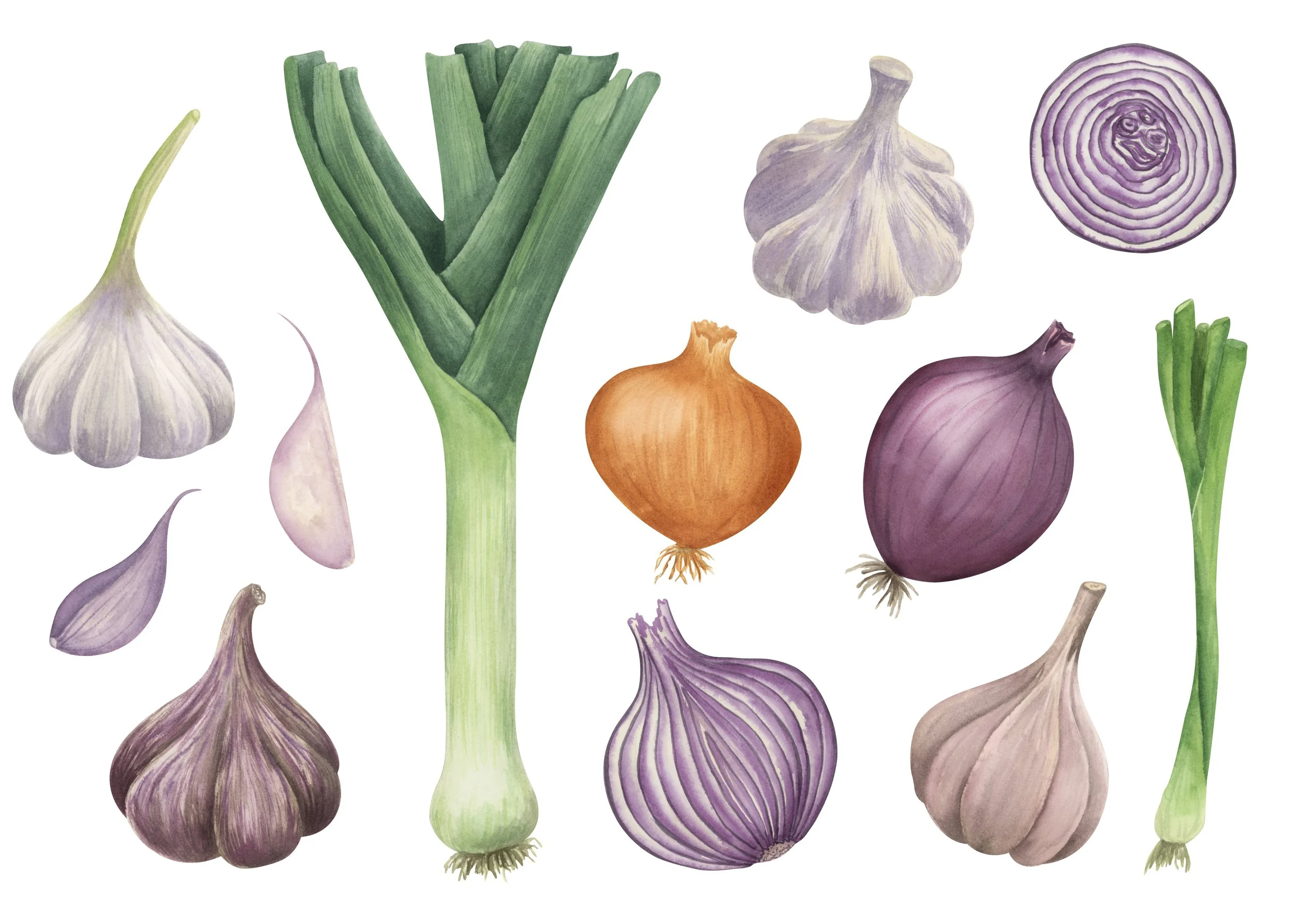
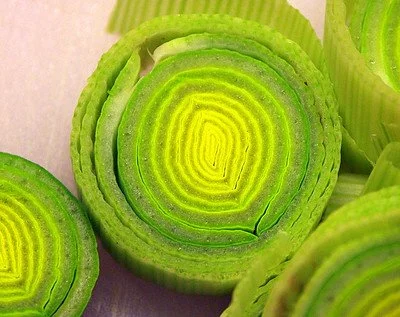
At its core, a leek belongs to the allium family—think onions, garlic, and chives—but unlike an onion, which forms a round bulb, a leek grows as a layered cylinder of tightly packed leaf sheaths. The part most people cook with is the pale white to light green stalk, although the darker green tops can be equally valuable when used thoughtfully.
One of the most interesting things about leeks is that they look refined but are actually quite hardy. They grow by gradually building layer upon layer of leaves around the stem, which gives them that long, elegant shape. They are also famous for holding onto grit and soil between their layers, which means they require a little care in preparation. But that extra attention is worth it, because once cleaned and cooked, leeks become silky, sweet, and deeply satisfying.
It’s their mellow personality that draws you in: a sweet onion-like essence that builds gradually, never overwhelming. The dark green tops, often overlooked, add a robust backbone to stocks and broths, proving nothing about a leek goes to waste if you use it thoughtfully.
The Many Faces of the Leek
Imagine you’re at the market, eyeing a pile of leeks, and you notice they’re not all the same. Some stand out as long and slender, almost delicate, with a pale white shaft that promises a gentle, buttery flavor. Others are thicker and more substantial, with a sturdy body and an earthier, more assertive taste. You might wonder which one to pick—and that’s a great question, because the variety you choose can quietly shape the outcome of your dish.
Think of it this way: smaller leeks, often the younger ones, tend to be more tender and subtly sweet. They shine in quicker preparations, like a light sauté alongside eggs, a delicate tart, or a simple spring soup where you want the flavor to melt in softly without overpowering the rest.
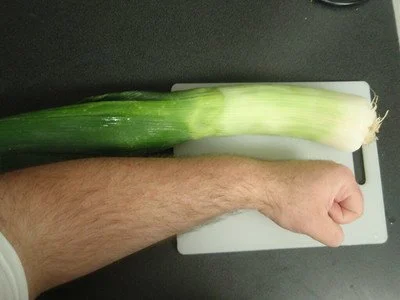
Larger leeks, on the other hand, bring more robustness, with tougher outer layers and a deeper allium character. These are your go-to for heartier fare—think long-simmered braises, roasted vegetable medleys, or substantial winter soups where the leek holds its shape and adds a savory backbone.
You’ll sometimes see leeks grouped by season, too, which gives you another helpful clue. Summer leeks are typically slimmer and more refined, cooking up quickly with a fresh, mild sweetness. Winter leeks are the workhorses: thicker, fiber-rich, and bolder in flavor, perfect for dishes that need slow heat to coax out their full potential. If your goal is a leek that nearly dissolves into creamy perfection, reach for those smaller, tender beauties. Craving something with more presence and texture? The bigger winter types will deliver.
Next time you’re shopping, feel for firmness—crisp layers, a clean white-to-pale-green stalk—and let the size guide you. Slender for subtlety, substantial for strength. It’s a small decision that makes cooking with leeks feel intuitive and rewarding.
The Flavor of a Leek, Part by Part
One of the best ways to appreciate leeks is to taste them as separate parts, because the flavor changes quite noticeably from top to bottom.
The white base is the mildest and sweetest part. When cooked gently, it becomes soft and almost buttery, with a delicate onion-like flavor that blends beautifully into soups, sauces, and egg dishes.
The pale green section is slightly firmer and a bit more assertive. It still tastes sweet, but it has more vegetal character and a stronger allium note. This middle section is often the sweet spot for many recipes, especially when you want flavor without overwhelming sharpness.
The darker green tops are more fibrous and robust. They are not usually the best choice for delicate dishes on their own, but they are excellent for stocks, broth, and slow-simmered recipes where they can release their flavor without needing to be tender enough to eat whole. You can think of the tops as the leek’s useful workhorse part: less pretty, perhaps, but too valuable to throw away.
If you roast leeks, you may notice that the white and light green parts become especially sweet, almost like caramelized onions but gentler. If you sauté them slowly, they soften into a lush texture that makes even a simple dish feel layered and comforting. This is one reason leeks are so beloved in soups. They create a foundation that tastes rich without becoming heavy.
The sweetness of leeks pairs well with both earthy ingredients (mushrooms, root vegetables) and bright flavors (citrus, herbs, vinegar), making them uniquely versatile.
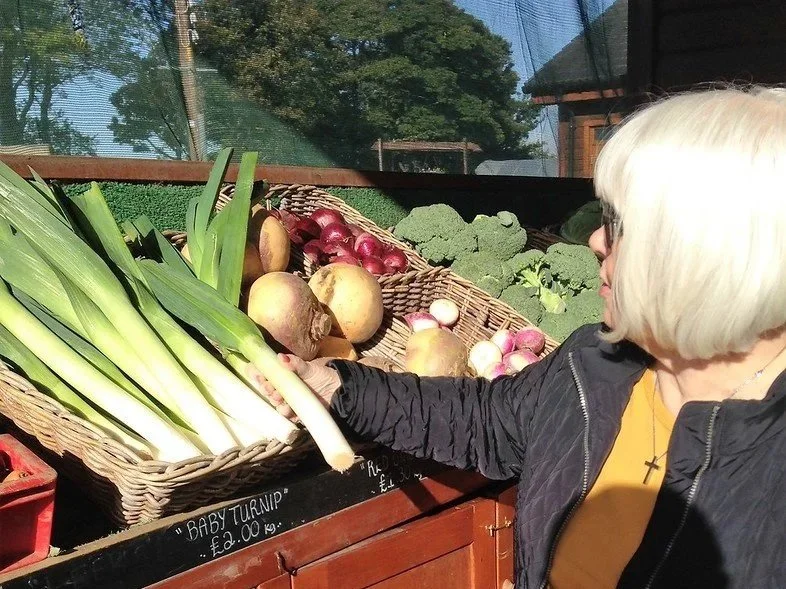
Terry Gilley: Buying leeks - Blacketyside Farm Shop
Buying and Storing Leeks
Leeks are one of those ingredients that reward a little attention at the store. At first glance, they can all look the same, but small differences will shape how they cook and how much you enjoy using them.
When choosing leeks, look for ones that feel firm in your hand, with crisp white and pale green sections. The tops should be a deep green and fresh-looking, not wilted or yellowing. A good leek has a certain weight to it—solid, not spongy—and the layers should feel tightly packed. Thinner leeks are often more tender, while larger ones can be just as flavorful but may need a bit more care when prepping.
Once you bring them home, leeks don’t ask for much. They keep well in the refrigerator, loosely wrapped or tucked into the crisper drawer, where they can last for up to a couple of weeks. There’s no need to wash them before storing; in fact, it’s better to wait until you’re ready to use them. Keeping them whole helps preserve their structure and flavor.
You may notice that the dark green tops feel tougher than the rest of the leek. While they’re not typically used in everyday cooking, they’re far from waste. Set them aside in the freezer and add them to stocks or broths over time—they bring a gentle, layered flavor that builds quietly in the background.
How Leeks Fit Into the Kitchen
Leeks have a quiet versatility that reveals itself the more you cook with them. They’re not an ingredient that demands attention, but rather one that supports, softens, and brings balance to a dish. Once you understand how they behave in the pan, they become something you reach for again and again.
At their core, leeks respond best to gentle cooking and a bit of patience. When sliced and slowly sautéed in olive oil or butter, they soften into silky strands, releasing a natural sweetness that forms the foundation of many dishes. This is often where good cooking begins—not with complexity, but with a simple, well-built base. Leeks excel in this role, creating depth without overpowering what comes next.
From there, they adapt easily to different techniques. Roasting brings out a deeper, more caramelized flavor, especially when the edges begin to turn golden. Braising transforms them into something tender and almost luxurious, as they slowly absorb the flavors of broth, wine, or cream. Even when used raw—thinly sliced and lightly dressed—they offer a mild, fresh bite that feels more delicate than onions.
In everyday cooking, leeks move easily between roles. They can be the backbone of a soup or stew, folded into a quiche or frittata, layered into a gratin, or added to pasta, grain bowls, and savory tarts. They pair especially well with eggs, cheese, and seafood—particularly fish—where their mild flavor enhances without competing.
If there’s one way to begin cooking with leeks, it’s this: start simple. Slice them, cook them slowly, and notice how they change. From there, you can build—adding garlic, herbs, vegetables, or broth—letting each layer develop naturally.
It’s a quiet process, but one that teaches an important rhythm in the kitchen. And leeks, more than most ingredients, are happy to guide you through it.
Leeks Around the World
One of the most interesting things about leeks is how quietly they appear across so many different cuisines. They’re rarely the headline ingredient, yet they show up again and again—woven into traditional dishes that have been passed down through generations.
In Europe, leeks are deeply rooted in both everyday cooking and cultural identity. In Wales, they’re more than just an ingredient—they’re a national symbol, often celebrated in a simple leek and potato soup that reflects the kind of humble, sustaining food people have relied on for centuries. Across the Channel in France, leeks take on a more refined expression in vichyssoise, a silky blend of leeks, potatoes, and cream, served chilled or warm depending on the season.
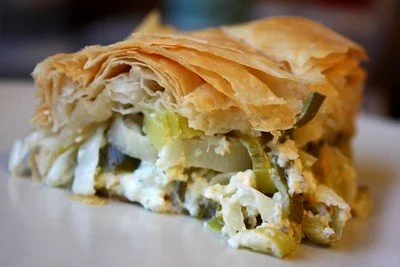
In Greece, leeks are folded into both rustic and celebratory dishes. Prasopita, (shown by Eva Kosmas Flores) a savory pie layered with filo, leeks, feta, and eggs, is rich yet balanced, while prasorizo brings them into a simpler form—gently cooked with rice, olive oil, and lemon.

In Switzerland, leeks are slowly cooked down with potatoes in papet vaudois, a dish that becomes almost spoon-soft and deeply comforting. Nearby, in the Basque region, porrusalda offers a lighter approach—a broth of leeks, potatoes, and carrots, sometimes paired with cod (Restaurante Kaialde’s Porrusalda con bakalao shown).
Further east in Europe, Romania’s ciorbă de praz highlights leeks in a tangy, herb-filled soup, while in Spain, particularly in Catalonia, their close relative—the calçot—is grilled over open flames and served with romesco sauce in a seasonal ritual that feels as much about gathering as it does about the food itself.
In Asia, leeks take on new forms and flavors. In Sri Lanka, they’re often cooked with coconut milk and spices into a fragrant curry or quickly stir-fried with chili, garlic, and coconut in a dish known as thel dala. In Japan, leeks frequently appear as part of a larger composition—added to rice bowls or seafood dishes, where their mild sharpness balances delicate flavors.
Across the Middle East and Mediterranean, leeks are treated with the same care and simplicity seen elsewhere. In Turkey and the Levant, they’re often braised slowly in olive oil with carrots, rice, and lemon, creating a dish that is both light and deeply satisfying.
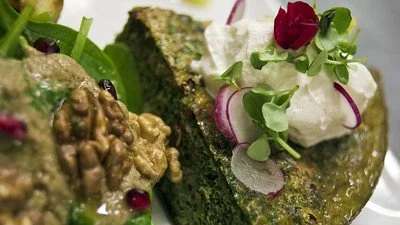
In Sephardic traditions, leeks are transformed into fritters or baked dishes for holidays, while in Iran, they are folded into kuku sabzi, an herb-rich frittata that celebrates freshness and abundance (shown by Omid Taballai).
What ties all of these dishes together is not just the ingredient, but the approach. Again and again, leeks are given time to soften, to sweeten, and to become part of something larger than themselves.
It’s a quiet role—but one that connects kitchens across cultures in a way that feels both familiar and enduring.
Preparing Leeks: A Simple, Important Step
If there’s one place where leeks ask for a little extra care, it’s in the preparation. Their layered structure, which gives them such a beautiful texture when cooked, also allows them to hold onto soil as they grow. Taking a moment to clean them well makes all the difference.
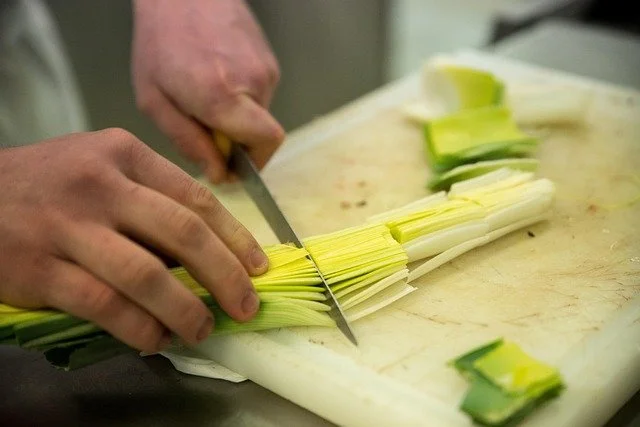
Start by trimming off the root end and the darker green tops, leaving the white and light green portions. From there, slice the leek in half lengthwise. This simple step opens up the layers, making it easier to see where any grit might be hiding.
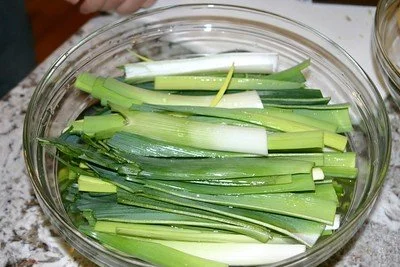
As you slice, you may notice fine grains of dirt tucked between the layers. A gentle rinse under cool water is usually enough to wash it away. Some cooks prefer to slice first and then rinse, letting the pieces float briefly in a bowl of water so any remaining grit settles to the bottom. Either approach works—the goal is simply to leave the leeks clean and ready to cook.
Once prepped, leeks are incredibly forgiving. They can be sliced thinly for soft sautés, cut into larger pieces for roasting, or left in longer sections for braising. However you choose to use them, that initial step—taking the time to clean and prepare them properly—sets the stage for everything that follows.
And like so much in cooking, it’s a small, quiet step that makes all the difference.

A Brief History
Leeks have been part of the human table for thousands of years, long before they were neatly stacked in grocery store bins or tucked into modern recipes. If you trace them back, you’ll find them growing along the edges of ancient fields in the Middle East and Mediterranean, where early farmers first began cultivating wild alliums for their flavor and reliability.
Unlike more delicate crops, leeks were dependable. They could withstand cooler weather, grow steadily, and store well enough to become a staple in everyday cooking. Over time, they found their way into the kitchens of ancient Egypt, where they were valued not just as food, but as something close to sacred. Leeks were believed to carry strength and vitality, and records suggest they were even consumed by laborers building the pyramids—simple food meant to sustain long days of physical work.
The Romans embraced leeks with equal enthusiasm, though perhaps with a bit more flair. Emperor Nero was said to eat them regularly, believing they improved his voice—earning him the nickname “Porrophagus,” or “leek eater.” Whether or not they truly enhanced his singing is debatable, but their place at the Roman table was firmly established. They appeared in broths, stews, and rustic dishes that relied on slow cooking—methods that still suit them today.
As leeks traveled across Europe, they took on cultural meaning as well as culinary importance. Nowhere is this more evident than in Wales, where the leek became a national emblem.
According to legend, Welsh soldiers wore leeks on their helmets during battle to distinguish themselves from their enemies. Over time, that practical gesture became tradition, and the leek remains a symbol of Welsh pride, still worn on St. David’s Day each year.

Through centuries of migration, trade, and changing food traditions, leeks held their place—not as the centerpiece of elaborate meals, but as a quiet constant. They were the ingredient that stretched a pot of soup, softened the edge of stronger flavors, and added depth without demanding attention.
And in many ways, that hasn’t changed. Today, leeks still reward the same approach they always have: patience, simplicity, and a willingness to let an ingredient speak for itself.

Fungus Guy: Wild leeks (Allium tricoccum), Whitefish Island, Batchewana First Nation
Wild Leeks (Ramps): Spring’s Seasonal Treasure
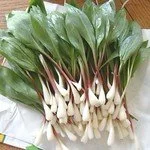
If leeks are the cultivated, composed member of the family, ramps are their wild, intensely aromatic relatives. Also called wild leeks, ramps are a North American spring perennial with broad leaves, slender stems, and a flavor that lands somewhere between onion and garlic, only brighter and more forceful. They are a seasonal event more than a year-round ingredient, and that short window is part of what makes them special.
Ramps appear early in spring, often before many other vegetables are available locally. That timing gives them almost a ceremonial quality. For cooks, foragers, and food lovers, ramps can feel like a sign that the season is turning. Their leaves are tender, their bulbs are small, and their aroma is unmistakable.
What makes ramps especially interesting is that every part of the plant can be used in different ways.
The leaves are often milder and can be blended into pesto, chopped into eggs, or wilted into warm dishes. The stems and bulbs have a stronger flavor, closer to a very assertive scallion crossed with garlic. Because they are so flavorful, even a little goes a long way.
Why Ramps Fascinate So Many Cooks
Part of the ramp’s appeal is flavor, but part of it is also scarcity. They are available for only a short time, which naturally makes people pay attention. Seasonal ingredients have a way of making cooking feel more vivid. You do not just buy them; you wait for them. You make a plan around them. You use them with a certain attentiveness that everyday ingredients sometimes do not inspire.
Ramps are also rooted in a long tradition of foraging and regional food culture. They are the kind of ingredient that connects the kitchen to the landscape. For many people, that connection is a large part of the pleasure. A spring ramp meal does not feel generic. It feels local, timely, and alive.
Because ramps are wild and highly sought after, they also invite a note of caution. Responsible harvesting matters. You’re encouraged to buy from reputable growers or harvest them carefully and sustainably.
How to Cook With Ramps
Ramps can be used in many of the same ways as leeks, but their flavor is more assertive, so they often shine in simpler preparations. If you want to preserve the spirit of the plant, a light hand is usually best.
You can sauté ramp bulbs and stems in butter or olive oil and serve them with eggs, potatoes, rice, or fish. The leaves can be chopped and added at the end of cooking so they keep some freshness.
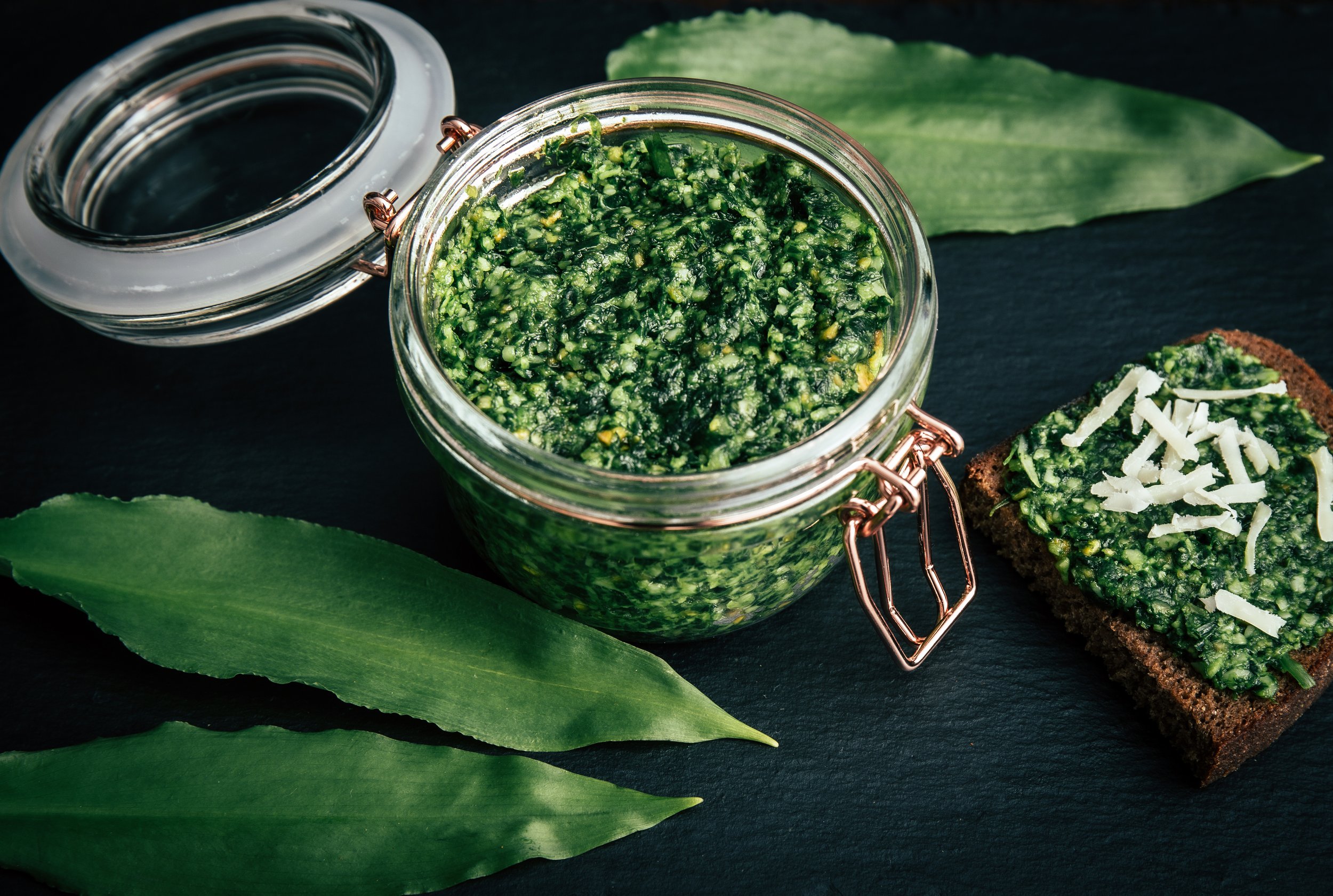
Ramp pesto (shown) is a classic use, since the leaves blend beautifully with nuts, oil, and cheese. Ramp butter is another excellent idea: finely chopped ramps mixed into softened butter can be spread on bread, melted over vegetables, or tucked under the skin of chicken or fish.
They also work well in pasta, risotto, soup, and savory baked dishes. If you are using ramps for the first time, start with a small amount and taste as you go. Their flavor is bold, and part of the pleasure is learning how to balance that strength with other ingredients.
Nourishment in a Simple Ingredient
Leeks may feel subtle in flavor, but they offer a quiet kind of nourishment that fits beautifully into everyday cooking. Like others in the allium family (onions, garlic, shallots), they bring more than just taste to the table—they support the body in steady, supportive ways.
One of the simplest ways to think about leeks is this: they help build a strong foundation.
Supporting Digestion Leeks contain natural fibers that help support digestion and gut health. These fibers act as fuel for beneficial bacteria in the gut, encouraging balance over time. When cooked slowly, leeks also become very gentle on the digestive system, making them an easy addition to meals.
A Source of Antioxidants Leeks provide plant compounds that help protect the body from everyday stress and wear. While you won’t taste this directly, it’s part of what makes a diet rich in vegetables feel so supportive over time—small, consistent inputs that add up.
Heart-Supportive Nutrients They also contain nutrients like potassium and compounds like kaempferol, allicin, and other thiosulfinates that are often associated with heart health. Including leeks regularly—alongside other whole foods—can be part of a pattern that supports overall cardiovascular wellness.
Light, Yet Satisfying Leeks are naturally low in calories but rich in flavor, which makes them especially helpful when you’re looking to create meals that feel both satisfying and balanced. They add depth and richness without heaviness.
Hydrating and Mineral-Rich With a high water content and a range of minerals, leeks contribute to hydration and overall nourishment in a subtle way—another reason they fit so well into simple, whole-food cooking.
Leeks aren’t a “superfood,” and they don’t need to be. Their value comes from how easily they fit into everyday meals. When you cook them slowly, pair them with other whole ingredients, and enjoy them regularly, they become part of a larger rhythm—one that supports your health in a steady, sustainable way.

Michael Zatouroff: Ham and Leek Pithivier
Why Cook with Leeks?
Leeks encourage a slower, more intentional approach. They reward patience and care, teaching cooks how to coax flavor from simplicity. Their adaptability—from delicate raw slivers to caramelized braises—makes them an essential tool in any kitchen.
Working with leeks is less about showing off technique and more about learning to listen to your ingredients. They remind us that subtlety can be just as powerful as boldness, and that the quiet moments in cooking often yield the richest rewards.
Let’s get cooking!
You don’t have to get it perfect—you just have to start. Leeks are forgiving, steady, and surprisingly adaptable, making them a good place to build confidence in the kitchen.
Leek, Mushroom, and White Bean Ragout
Leek, Mushroom, and White Bean Ragout is a dish that comes together in one pan, built slowly from a few simple ingredients. It begins with leeks, gently cooked until they soften into silky ribbons, releasing a quiet sweetness that sets the tone for everything that follows.
Mushrooms are added next, bringing an earthy depth and a bit of texture—golden at the edges, tender in the center. Garlic, thyme, and rosemary layer in warmth and aroma, creating a base that feels both grounding and familiar.
Creamy white beans turn it into a meal. They absorb the flavors of the pan while adding substance, making this dish as nourishing as it is satisfying. A splash of lemon at the end lifts everything, balancing the richness with brightness and bringing the whole dish into focus.
It’s the kind of cooking that doesn’t rush you. A reminder that when you take your time—even just a few extra minutes—you can turn everyday ingredients into something quietly memorable. Serve it warm as a delicious side dish or on its own with a piece of crusty bread and let the simplicity speak for itself.

Leek, Mushroom, and White Bean Ragout
Ingredients
- 2 leeks, white and light green parts only (about 4 cups sliced)
- 2 tbsp olive oil
- 8 oz mushrooms (cremini or button), sliced
- 2 cloves garlic, minced
- 1 tsp fresh chopped thyme (or ½ tsp dried)
- ½ tsp fresh chopped rosemary (or ¼ tsp dried)
- 1 (15 oz) can white beans, drained and rinsed
- 1 cup vegetable broth
- Zest and juice of ½ lemon
- Salt and black pepper
- Optional: fresh parsley and grated parmesan cheese for finishing
Instructions
- Slice the leeks in half lengthwise, then into thin half-moons. Rinse well—leeks like to hold onto dirt.
- Warm a wide pan over medium-low heat and add the olive oil. Add the leeks with a pinch of salt and let them cook slowly.
- Stir occasionally and cook about 8–10 minutes until they’re tender but not soft.
- Increase the heat slightly and add the mushrooms and a pinch of salt. Cook for about 5 minutes until they release their moisture and start to turn golden.
- Stir in the garlic, thyme, and rosemary. Let it cook for about a minute, just until fragrant.
- Add the white beans and broth. Simmer for a few minutes to warm through, let the flavors blend and the broth slightly thicken.
- Finish with lemon zest and a small squeeze of lemon juice. Taste and adjust with salt, pepper, and more lemon juice if needed.
- Spoon into a bowl and finish with a drizzle of olive oil, fresh parsley, and grated parmesan cheese if desired.
Leek and Salmon Tart
This Leek and Salmon Tart is one of those dishes that feels a little special without asking too much of you. It starts, as so many good things do, with slowly cooked leeks—soft, fragrant, and just sweet enough to carry the rest of the ingredients.
Flaked salmon brings richness and depth, while smoked gouda cheese adds a gentle depth that keeps everything balanced. Fresh parsley and chives lighten the dish, layering in a clean, herbal note that cuts through the richness in a subtle way.
All of it is held together in a simple pie crust, giving the tart a rustic, approachable feel. The filling bakes into a soft, custardy texture—just set, not heavy—while the crust turns golden and crisp at the edges.
A bit of lemon zest woven through the filling, and perhaps a small squeeze just before serving, brings everything into focus. It’s the kind of dish that works just as well for a quiet dinner as it does for a relaxed gathering, where simple ingredients are given the space to shine.
Leek and Salmon Tart
Ingredients
- 1 store-bought or homemade pie crust (9-inch)
- 2 leeks, white and light green part (about 4 cups sliced)
- 2 tbsp olive oil or butter
- 6–8 oz cooked salmon, flaked (fresh, poached, or roasted)
- 3 eggs
- ¼ cup milk or plain yogurt
- 4 oz smoked gouda cheese, shredded
- 2 tbsp chopped fresh parsley
- 2 tbsp chopped chives
- Zest of ½ lemon
- Salt and black pepper
Instructions
- Preheat oven to 375°F.
- Slice and clean the leeks carefully (halves, then thin half-moons). Rinse to remove grit.
- Warm olive oil or butter in a skillet over medium-low heat. Add the leeks with a pinch of salt and cook slowly until soft and silky, about 8–10 minutes. Set aside to cool slightly.
- Roll out the pie crust to fit into a 9-inch tart or pie pan. Gently press it into the pan, crimping edges if desired. Prick the bottom lightly with a fork.
- Blind bake for 8–10 minutes to prevent sogginess.
- In a bowl, whisk together eggs and milk or yogurt. Season with salt and pepper.
- Fold in cooked leeks, flaked salmon, shredded cheese, chopped parsley and chives, and lemon zest.
- Pour the filling into the prepared pie crust. Spread evenly, keeping it within the edges.
- Bake for 30–35 minutes, until the filling is set and the crust is golden. Let it rest 5 minutes before slicing.
There you have it!
Not every ingredient needs to be the star of the plate. Some are there to support, to round things out, to make everything else feel more complete. Leeks do that beautifully.