
Beyond Probiotics Part 1: The Tradition and Science of Fermented Foods
When most people hear the words "fermented foods," they think of probiotics. As it turns out, that's only a small part of a much bigger story. This first article in a three-part series explores fermentation itself—how humans have worked alongside microbes for thousands of years to preserve food, create flavor, and transform simple ingredients into something entirely new. In Part Two, we'll explore what happens when those foods reach our bodies and what science is uncovering about the connections between the gut, the brain, the immune system, metabolism, and overall health. Finally, in part Three, we’ll take it into the kitchen with ways to bring fermentation into your life. Enjoy!
We've Been Eating Fermented Foods Longer Than We've Had Refrigerators
There are some foods that seem so familiar, so woven into everyday life, that we rarely stop to consider how they came to be. Consider a slice of sourdough toast in the morning eaten with a yogurt and berry parfait and accompanied by a cup of coffee. At first glance, these foods may not appear to have much in common. Yet each one owes part of its existence to one of humanity's oldest food technologies: fermentation.
Long before scientists understood bacteria and long before microscopes revealed the invisible world of microbes, people around the globe were fermenting foods. They didn't know what microorganisms were so they couldn't explain the chemistry taking place in a crock of cabbage or a jar of milk but what they did know was that certain practices consistently transformed food in useful and often delicious ways.
Milk lasted longer and became tangy yogurt. Cabbage became sauerkraut. Grains became bread. Fruit became wine. Soybeans became miso and tempeh. Across cultures separated by oceans and centuries, people discovered that when they worked alongside natural processes rather than against them, food became more stable, more flavorful, and often more nourishing.
Today, modern science is helping us understand why fermentation has remained part of human food traditions for thousands of years. Researchers are uncovering fascinating connections between fermented foods and the microbiome, digestion, immunity, metabolism, and healthy aging. Yet even as the science advances, fermentation remains something beautifully simple at its core: a collaboration between humans and microbes.
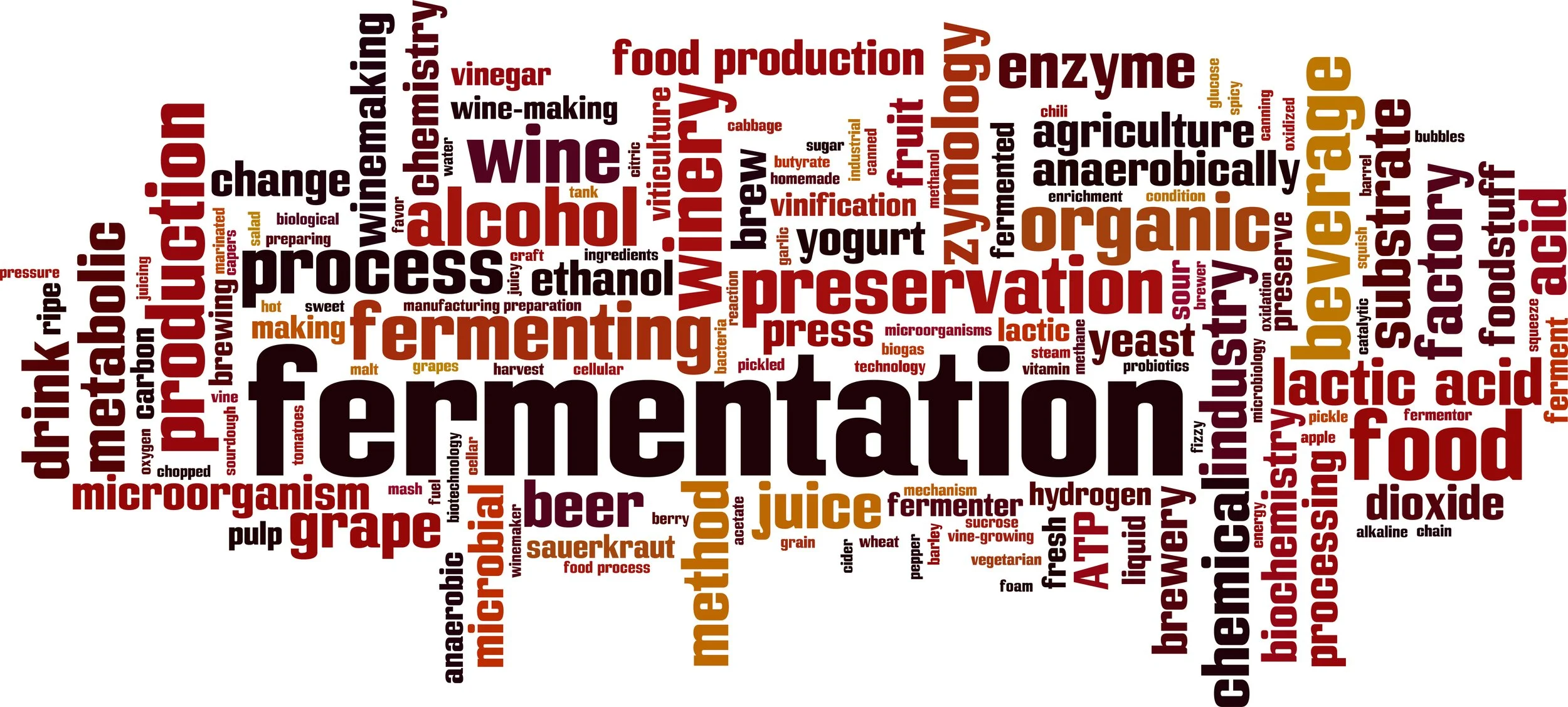
Many conversations about fermented foods begin and end with probiotics. While probiotics are certainly part of the story, they are far from the whole story. Fermented foods are not merely vehicles for beneficial bacteria. They are living examples of how food changes, evolves, and develops through relationships with microorganisms.
As we'll explore throughout this article, fermentation influences flavor, texture, preservation, digestibility, and much more. In many ways, understanding fermentation offers a new perspective on food itself.
Fermentation: Humanity's Original Food Preservation Method
It is easy to forget how recently refrigeration became part of daily life. For most of human history, keeping food from spoiling was a constant challenge because harvests were seasonal, fresh milk spoiled quickly, and vegetables were abundant for a short period and scarce for much of the year. Without reliable methods of preservation, entire communities faced the possibility of food shortages.
Before the invention of modern refrigeration, ancient cultures survived by mastering natural techniques like drying, salting, sugaring, smoking, and fermentation. These tried and true methods altered the food’s environment by removing moisture, creating physical barriers, or increasing acidity that inactivated enzymes and halted the growth of spoilage-causing bacteria and molds. In today's blog we’re focusing on fermentation.
No one knows exactly when humans first began intentionally fermenting foods. Evidence suggests that fermentation may be at least 9,000 years old, and perhaps much older. It likely began not through careful experimentation but through observation. People noticed that certain foods changed over time - sometimes making the food unsafe while at other times they produced something surprisingly delicious. For example, milk left under the right conditions thickened and soured, grains mixed with water bubbled and rose, and vegetables submerged in brine developed complex flavors while remaining edible long after harvest. Over generations, these observations became culinary traditions.
What is truly remarkable is how many different cultures around the world arrived at fermentation independently, yet at similar times. Different methods were developed by different regions because climates varied and warmth, humidity, and seasonality affected which microbes thrived and how quickly foods fermented. This explains why, although fermented foods from different regions often look similar, they have very different flavors and forms. Across regions, the food reflects the local staple: rice and soy in East Asia, milk in pastoral regions, grains in cereal-growing areas, and fish or vegetables in coastal or warm climates.
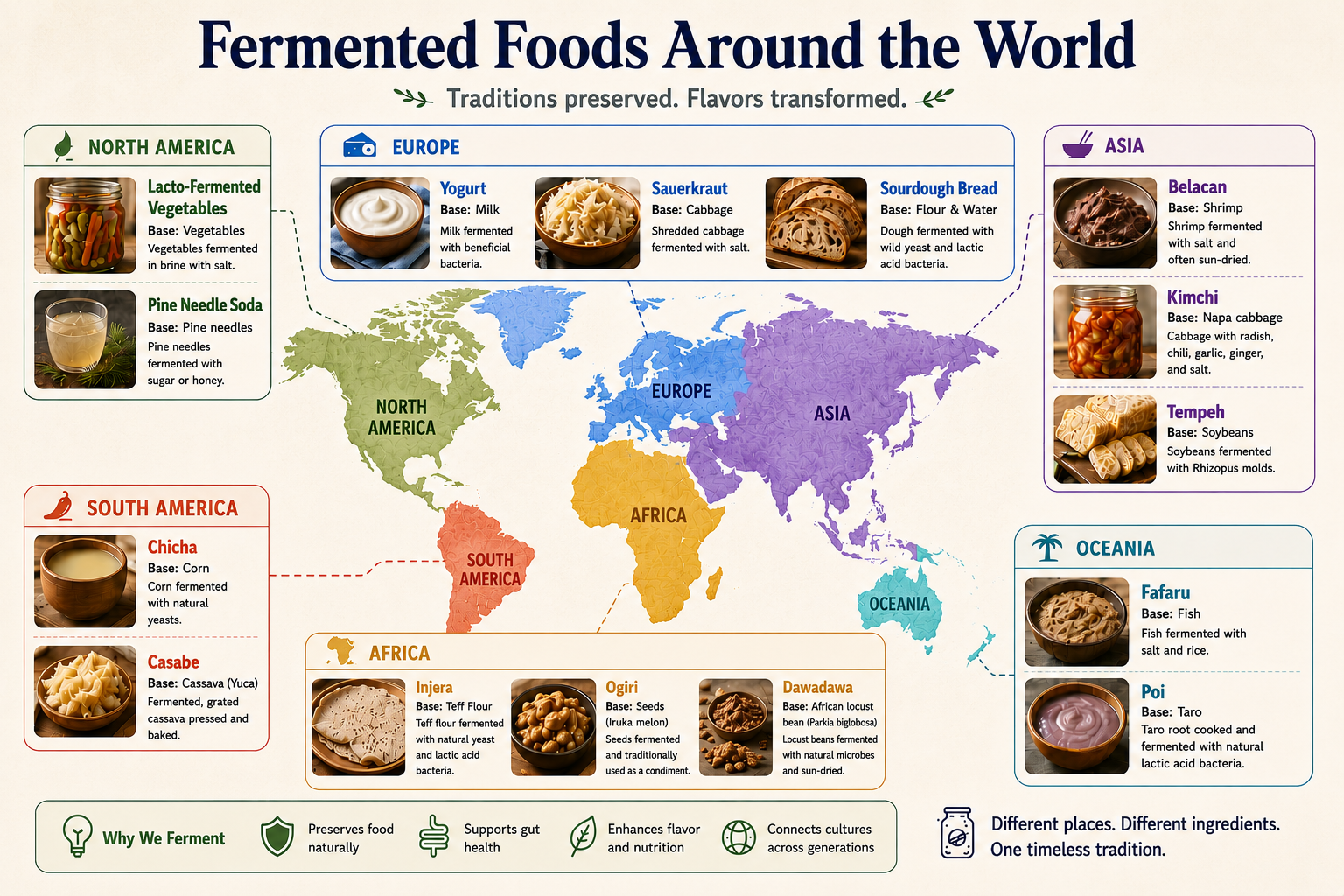
While preservation was often the primary goal, fermentation offered other benefits as well such as reducing waste and creating distinctive flavors. It also allowed communities to store food through colder, lean seasons when fresh ingredients were scarce. As a result, many fermented foods became cherished cultural foods in their own right rather than simply practical necessities.
It is particularly fascinating that some of the world's most beloved foods exist because people were trying to solve the problem of making food last. They weren't necessarily seeking culinary innovation and yet in the process, they discovered entirely new flavors, textures, and traditions. What began as preservation eventually became traditional cuisine.
The Scientists Who Helped Us Understand Fermentation
For thousands of years, people practiced fermentation successfully without knowing exactly why it worked.
That began to change during the nineteenth century when French scientist Louis Pasteur demonstrated that microorganisms were responsible for both good and bad fermentation. During his investigation into beet juice fermentation, he found not only the known yeast cells that turned the juice into alcohol, but also a new type of microorganism. These black, rod shaped microbes quickly overwhelmed the yeast cells in the beet juice and formed not alcohol but lactic acid thus ruining it. After identifying these organisms he went on to develop the method of heating liquids - wine, beer, milk, or vinegar - briefly so certain organisms could be killed thus sterilizing or “pasteurizing” the liquids. His work helped transform fermentation from a mysterious process into one that could be studied and understood.
Later, another scientist, Elie Metchnikoff, became interested in the connection between fermented dairy foods, good health, and longevity. Observing populations that regularly consumed a lot of cultured milk products, particularly Bulgarian peasants, he noticed they seemed to live long lives. He proposed that “good” bacteria might contribute to good health and healthy aging by improving intestinal health thus becoming the early founder of the probiotic movement.
These scientific discoveries didn't replace traditional knowledge and fermentation practices. Instead, they helped explain what people had already observed through generations of experience giving us a new understanding of this ancient practice.
Sandor Katz and the Modern Fermentation Revival
If there is one person who has helped reconnect modern home cooks with traditional fermentation practices, it is Sandor Katz. His influential books such as Wild Fermentation and The Art of Fermentation have become go-to guides for anyone learning to make fermented foods at home. Through his books, workshops, and teaching, Katz has introduced countless people to the idea that fermentation is not reserved for scientists, commercial food manufacturers, or specialists. It is something ordinary people can learn, explore, and enjoy in their own kitchens.
One of the themes that runs through his work is that fermentation is not about controlling nature so much as learning to work with it. He treats fermentation not just as a technique for preserving food, but as a way to reconnect with microbes, local ingredients, and traditional knowledge. While much of modern life encourages us to sterilize, sanitize, and eliminate uncertainty he reminds us through fermentation that life itself depends on relationships with countless unseen organisms.
This quote sums up his larger philosophy well: “The problem with killing 99.9 percent of bacteria is that most of them protect us from the few that can make us sick.” Instead of treating microbes as enemies, recognize them as part of the living systems that support food, health, and resilience.
Fermentation Changes Food in Fascinating Ways
One of the most common misconceptions about fermentation is that its primary purpose is preservation. While that is certainly important, fermentation does far more than simply keep food from spoiling. At its heart, fermentation is transformation.
Microorganisms such as bacteria, yeasts, and certain fungi consume components of food and create entirely new compounds in the process. Sugars become acids. Starches become simpler molecules. New aromas develop. Textures change. Flavors deepen and become more complex.
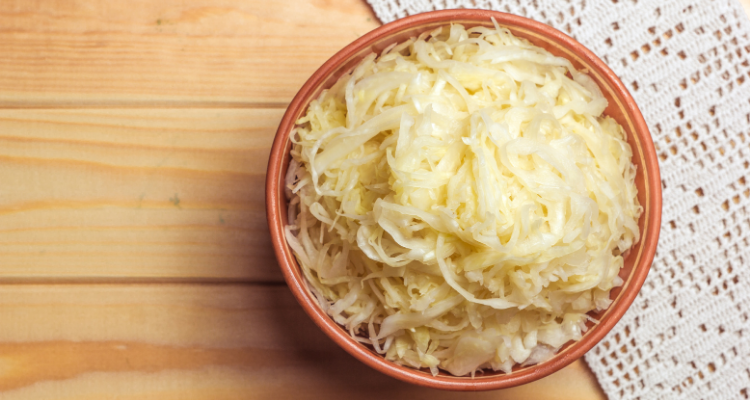
Think about the differences between cabbage and sauerkraut. Both are the same vegetable and yet if you’ve tasted them you know they are entirely different foods. The same is true of milk and yogurt, soybeans and miso, and tea and kombucha. The microbes involved are not simply preserving the original food, they’re actively reshaping it.
As they do so, these microbes create acids, enzymes, alcohols, and hundreds of flavor compounds while altering both texture and aroma. Ultimately, they influence how the food tastes and how we experience it.
This transformation is one reason fermented foods often feel so satisfying and why we enjoy them so much. They frequently contain layers of flavor - tangy, savory, earthy, complex, bright - that are difficult to create through other methods alone. Fermentation is one of nature's most talented flavor developers.
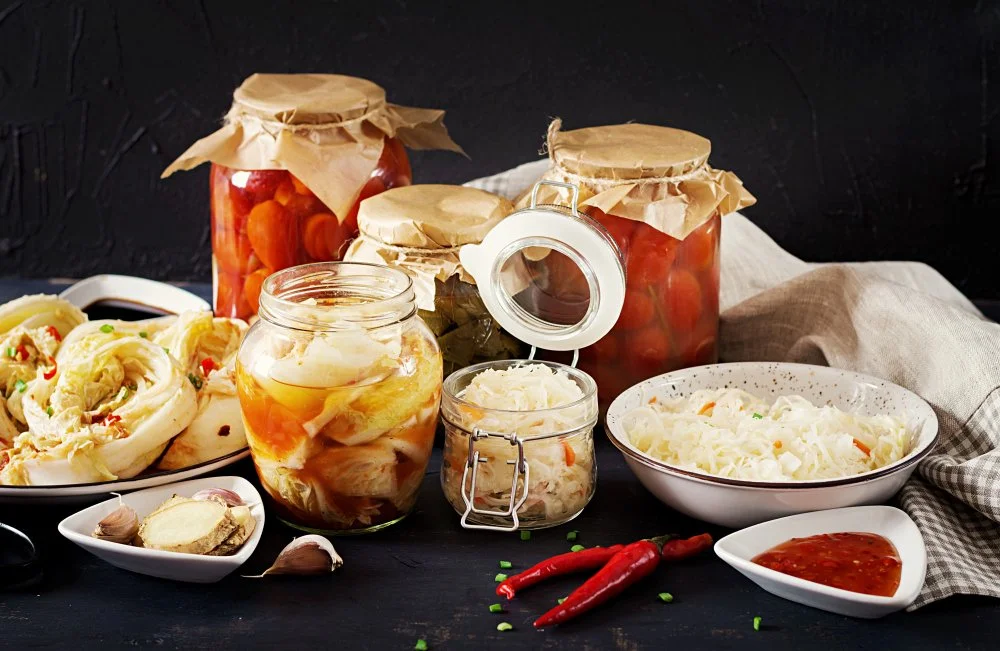
by timolina on Magnific
What Is Lacto-Fermentation?
When people first hear the term lacto-fermentation, they often assume it has something to do with dairy. It's an understandable conclusion being that the word "lacto" sounds very much like lactose, the natural sugar found in milk. In reality though, lacto-fermentation has nothing to do with dairy.
The "lacto" refers to lactic acid, a natural compound produced by certain beneficial bacteria as they consume sugars found in food. These bacteria are responsible for creating some of the world's most familiar fermented foods, including sauerkraut, kimchi, and naturally fermented pickles in a surprisingly elegant process.
When vegetables are mixed with the proper amount of salt, the salt begins drawing moisture from the plant cells. As this liquid is released, it creates a brine that surrounds the vegetables where naturally occurring beneficial bacteria begin to thrive.
These microbes feed on the sugars present in the vegetables and produce lactic acid as a byproduct thereby increasing acidity and creating conditions increasingly unfavorable for spoilage organisms. Hence the vegetables are not only preserved, but they are also transformed as their flavor becomes brighter and more complex, their texture changes, and new compounds are formed.
What’s fascinating the most about this process is that it doesn't require us to add the bacteria because they are already there. The cabbage that becomes sauerkraut arrives carrying the microorganisms needed to begin the transformation and the cucumber destined to become a fermented pickle already hosts the microbes that will help preserve it. We’re not creating life - we’re creating conditions that allow certain microorganisms to flourish while discouraging others. So in many ways, fermentation is less about doing something to food and more about creating an environment where natural processes can unfold.
Salt plays an important role in the lacto-fermentation process. Beyond drawing out moisture from the vegetables, it helps create selective conditions that favor beneficial microbes while discouraging organisms that could lead to spoilage. The amount matters as using too little allows undesirable organisms to gain a foothold while using too much results in even the beneficial microbes struggling to thrive. This balance is one reason fermentation can feel both scientific and intuitive. There are principles that guide the process, yet there is also an element of observation and patience. You’ll learn to notice changes in aroma, texture, and flavor as you begin to trust the process.
For many people, that relationship with time is one of fermentation's hidden gifts. So much of modern life encourages speed - fast food, immediate answers, results without waiting. Fermentation is different though. Once the process is started we need to step back, relax, and let the microbes do the rest.
Fermentation Is More Common Than You Think
When most people think about fermented foods, a fairly predictable list comes to mind. Yogurt. Sauerkraut. Kimchi. Kombucha. Yet fermentation quietly influences far more of our food supply than most of us realize. In fact, many foods we enjoy every day owe much of their character to fermentation even though we rarely think of them that way.
Take coffee, for example. Before coffee beans are roasted and brewed, the fruit surrounding the beans must be removed. During processing, naturally occurring microorganisms help break down that fruit. The fermentation that occurs during this stage contributes significantly to the flavor profile of the finished coffee. In fact there are three types of coffee bean fermentation: no pulp, some pulp, and full pulp. Each one creates a different flavor profile that ranges from crisp and clean to bold and fruity. The next time you notice fruity notes, chocolate undertones, or bright acidity in a cup of coffee, you're experiencing some of the effects of fermentation.
Chocolate tells a similar story. Fresh cacao beans don't taste much like chocolate at all. After harvest, the beans are piled together and fermented for several days. During this time, yeasts and bacteria begin transforming the sugars and compounds within the cacao. This fermentation initiates the flavor development that ultimately gives chocolate its rich, complex character. Chocolate will have different flavors depending on the bean variety fermentation conditions. Sugar, metabolites, microbe species, and even temperature all play an important part in the final flavor profile. So without fermentation, chocolate as we know it simply wouldn't exist.
Cheese offers another fascinating example. Milk on its own is relatively simple. Yet through fermentation and aging, it becomes thousands of different cheeses with unique flavors, textures, aromas, and personalities. A creamy brie, a sharp cheddar, and a crumbly blue cheese may all begin with milk, but microbial activity helps determine where each journey ends. For example, different types of bleu cheese exist because they are made using various strains of Penicillium mold, along with differences in factors like milk source, aging time, moisture, and salt content. These variations result in distinct flavors, textures, and aromas among the different bleu cheese varieties.
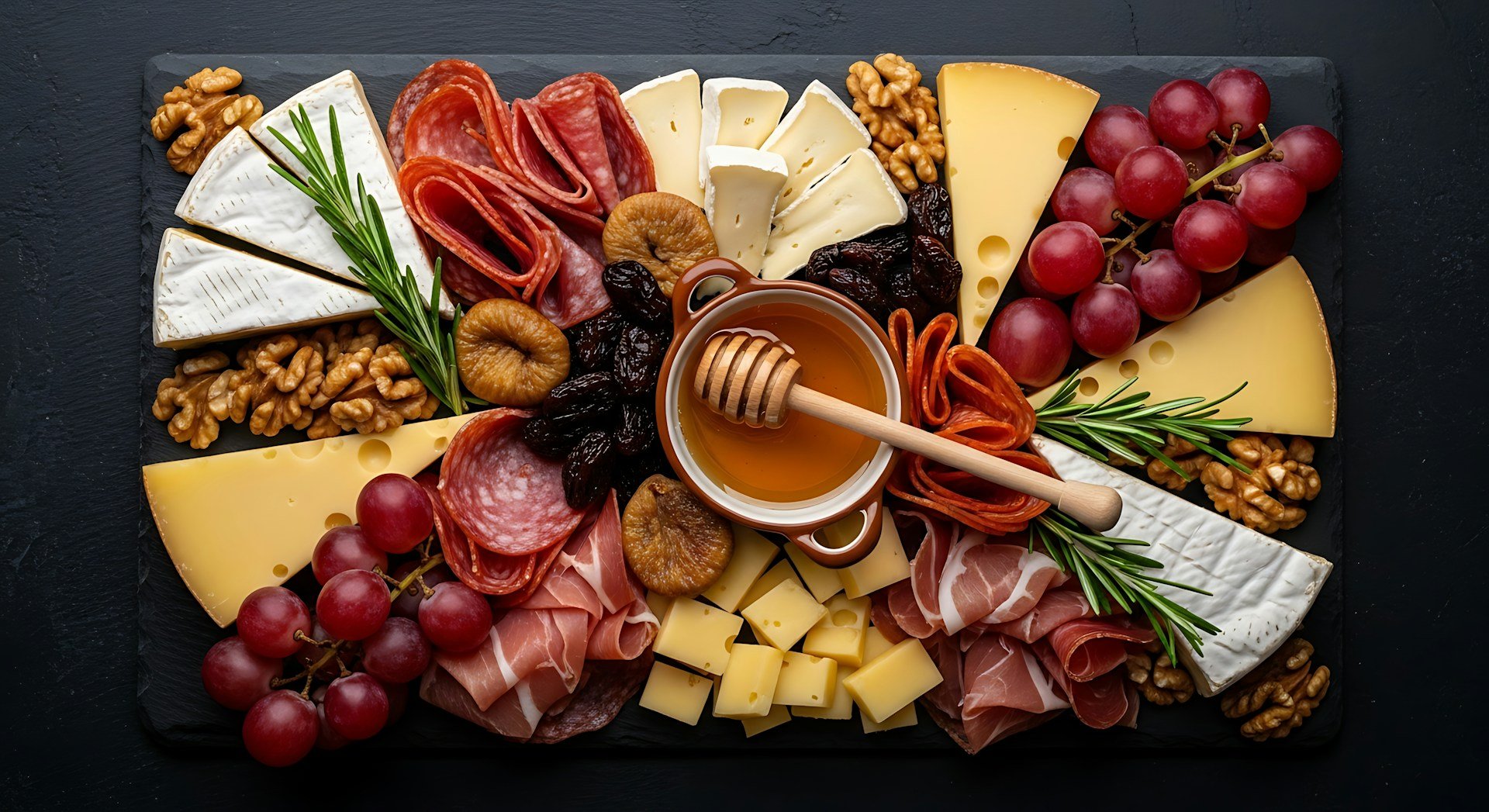
Photo by lipi rani ghosh on Unsplash
Then there is sourdough bread. A sourdough starter is a living community of wild yeasts and beneficial bacteria. Before a loaf ever enters the oven, those microorganisms have already spent hours or days transforming the dough. San Francisco sourdough is considered the quintessential sourdough bread with its crispy crust and tangy flavor. It gets its characteristic tangy flavor from its local, native lactic acid bacteria called L. sanfranciscensis. Sourdough starters are unique to the region where they are grown.
The same principle applies to vinegar. What begins as sugars is first transformed into alcohol by yeast. Then bacteria convert the alcohol into acetic acid, creating the tangy liquid found in kitchens around the world.
Soy sauce, miso, and tempeh each rely on their own intricate microbial communities. Through fermentation, simple ingredients develop extraordinary depth and complexity. The savory quality we often call umami owes much to these transformations.
Even many dry sausages and cured meats rely on fermentation. Beneficial bacteria contribute to flavor development, texture, preservation, and safety.
Once you begin looking for fermentation, you start seeing it everywhere. It becomes clear that microbes have been shaping our food for far longer than we've understood their role.
More Than Live Probiotics
As interest in gut health has grown, conversations about fermentation have increasingly focused on probiotics. While probiotics are certainly important, they can sometimes overshadow a larger truth. The value of fermented foods is not limited to the microorganisms that may still be alive when we eat them.
In fact, many beloved fermented foods contain few or no living microbes by the time they reach our plate. The bacteria and yeasts involved in making sourdough bread don't survive baking. The microorganisms responsible for fermenting coffee and cacao beans don't survive roasting. Many cheeses contain inactive cultures after aging and processing.
Yet few people would argue that fermentation didn't matter.
Without fermentation, these foods would have different tastes, aromas, and textures. Their nutritional characteristics would also change. The microbes may no longer be present, but the evidence of their work remains.
This is one of the most fascinating aspects of fermentation: the microorganisms leave their fingerprints behind. Through their activity, they transform ingredients into something new. Sometimes those changes are obvious, like the tang of sauerkraut or the effervescence of kombucha. Other times they are subtle, woven into the complexity of a piece of chocolate or the aroma rising from a morning cup of coffee.
Either way, the microbes have done their work. And that work may have implications far beyond flavor.
Looking Ahead: The Hidden World Inside Us
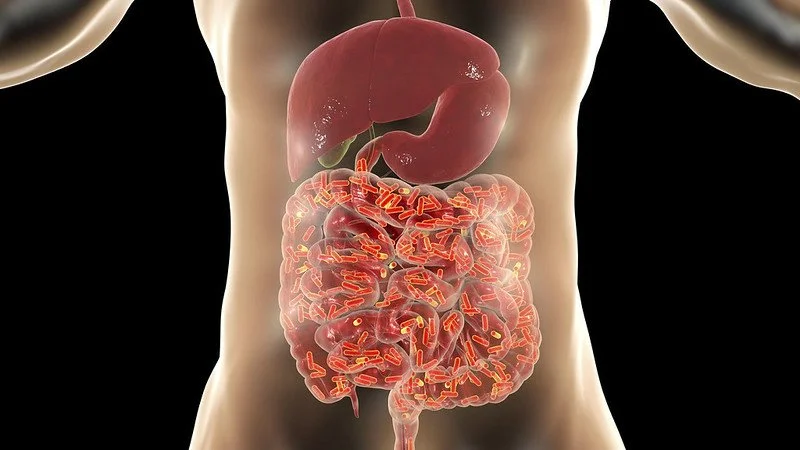
For most of human history, fermentation was valued because it preserved food and improved flavor. Today, scientists are exploring another reason these foods may matter. Many of the same microorganisms that transform foods also belong to a much larger ecosystem living within us.
Inside the digestive tract resides a vast community of bacteria, yeasts, fungi, and other microorganisms collectively known as the gut microbiome. Far from being passive passengers, these organisms participate in digestion, nutrient metabolism, immune regulation, and communication throughout the body. Researchers are increasingly discovering connections between this microbiome and systems we once considered entirely separate from the gut. There appears to be ongoing communication between the gut and the brain. The gut and the immune system. The gut and metabolism. Even the gut and cardiovascular health.
At the same time, scientists are uncovering new ways fermented foods may influence health—not only through live microorganisms, but also through compounds created during fermentation and even through inactive microbial cells. In other words, the story of fermented foods is becoming much bigger than probiotics.
In Part Two, we'll explore this emerging science more deeply. We'll look at what researchers are learning about the gut-brain axis, the relationship between the microbiome and the immune system, and the growing understanding of the gut's role in metabolism and heart health. Because fermentation isn't only a story about microbes - it's also a story about food, culture, connection, and our evolving understanding of what it means to nourish ourselves well.
Let’s get cooking!
Knowledge becomes meaningful when it finds its way into daily life. The recipes below offer a simple place to begin, inviting you to explore the flavors, traditions, and possibilities of fermentation while creating foods that can be enjoyed around your own table.
Apple and Date Muffins
These Apple and Date Muffins offer a wholesome twist on a classic fruit muffin by incorporating two fermented foods—kefir and sauerkraut. Sweet apples and soft dates provide natural sweetness and moisture, while cinnamon and nutmeg bring warm, cozy flavor to every bite. The result is a gluten-free muffin that's soft, flavorful, and satisfying without being overly sweet.
Kefir contributes a rich tang and helps create a tender texture, while sauerkraut adds moisture and complexity. Although baking eliminates most live probiotic cultures, fermented ingredients still offer organic acids, nutrients, and other fermentation-derived compounds that can be part of a healthy eating pattern.
Rich in fruit, fiber, and nourishing ingredients, these Apple and Date Muffins are a simple way to bring more variety to your kitchen while exploring new uses for fermented foods. Serve them with a protein-rich breakfast such as eggs, Greek yogurt, or a smoothie for a balanced and energizing start to the day.

Apple and Date Muffins
Ingredients
- 2 cups gluten-free flour blend
- 1 tsp cinnamon
- ¼ tsp nutmeg
- 1 tsp baking powder
- ½ tsp baking soda
- ¼ tsp salt
- ½ cup finely chopped Medjool dates
- ½ cup plain kefir
- 2 eggs
- 4 tbsp pure maple syrup
- 2 tbsp avocado oil
- ¼ tsp vanilla extract
- 1 cup fresh-fermented sauerkraut (unrinsed), drained, finely chopped
- 2 Honeycrisp apples, grated (about 2 cups)*
Instructions
- Preheat the oven to 350°F (175°C). Line a 12-cup muffin tin or lightly grease it.
- In a large bowl, whisk together the flour, cinnamon, nutmeg, baking powder, baking soda, and salt.
- Add the chopped dates and mix to coat the dates in the flour mixture.
- In a separate bowl, whisk the kefir, eggs, maple syrup, oil, and vanilla until smooth.
- Stir the chopped sauerkraut and grated apple into the wet ingredients.
- Add the wet ingredients to the dry ingredients and stir just until combined.
- Divide the batter evenly among the muffin cups.
- Bake for 18–22 minutes, or until the tops are lightly golden and a toothpick inserted in the center comes out clean.
- Let cool in the pan for 5 minutes before transferring to a wire rack.
Notes
- If the batter seems too loose, add 1-2 tablespoons additional glute-free flour.
- Substitute raisins, dried cherries, or dried apricots for the dates.
- *Apple varieties like Fuji, Gala, Honeycrisp, or Ambrosia work well.
Vanilla Chai Coffee Kefir Latte
Creamy, cool, and gently spiced, this Vanilla Chai Coffee Kefir Latte transforms a simple iced coffee into a nourishing beverage that supports both flavor and wellness. Cold brew coffee provides a smooth, bold coffee flavor, while milk kefir adds creaminess, protein, and a pleasant tang. The addition of chai spice brings notes of cinnamon, ginger, cardamom, and cloves, creating a warming contrast to the cool, creamy texture. Combined with vanilla and a touch of natural sweetener, the result is a flavorful drink that's easy to make and enjoyable any time of day.
The star ingredient is kefir, a fermented dairy beverage that has been enjoyed for centuries. During fermentation, beneficial bacteria and yeasts transform milk into a tangy, nutrient-rich drink that contains protein, calcium, B vitamins, and a wide variety of beneficial microorganisms.
This recipe comes together in just minutes and feels like a special coffeehouse treat without requiring specialty ingredients. Enjoy this Vanilla Chai Coffee Kefir Latte on warm mornings, after a workout, or anytime you're craving a delicious fermented-food beverage with a little extra nourishment.

Vanilla Chai Coffee Kefir Latte
Ingredients
- 1/2 cup cold brew coffee
- 1 cup milk kefir
- 1/2 cup ice cubes
- 1/4 tsp chai spice
- 1/2 - 1 tsp vanilla
- 1/2 tsp cacao powder (optional)
- pure maple syrup or honey to taste
Instructions
- Combine all ingredients in a blend and blend until smooth.
- Pour into a chilled glass and garnish with nutmeg.
There you have it!
Fermentation reminds us that transformation often happens gradually, quietly, and with time. Perhaps there's something comforting in that lesson, both in the kitchen and in life. Thank you for reading, and I look forward to continuing this conversation in Part Two.